
(AfroGamers.com) Treyarch put this out in 2010, and I still don’t think people give it enough credit for how strange it was willing to get. Most Call of Duty campaigns run the same play. Big guns, bigger explosions, a helicopter or two eating the dirt before the credits. This one had all that, sure. But it wanted something else from you. It wanted you a little lost. You sit down expecting Cold War soldiers and grenades, and the first thing the game shows you is a man tied to a chair. Lights stuttering. A voice somewhere in the dark asking him about codes he can’t remember. Numbers scrolling past like roaches you can’t stomp fast enough. That’s the hello. That’s how it greets you.
That opening still lives rent free in my skull. Alex Mason, tied down, sweating, disoriented. Somebody keeps asking him about broadcast codes. He doesn’t know. He genuinely doesn’t know, and neither do you, and that not knowing is the whole point. Most shooters hand you a rifle and a reason. This one handed you a headache and dared you to trust anything you saw.
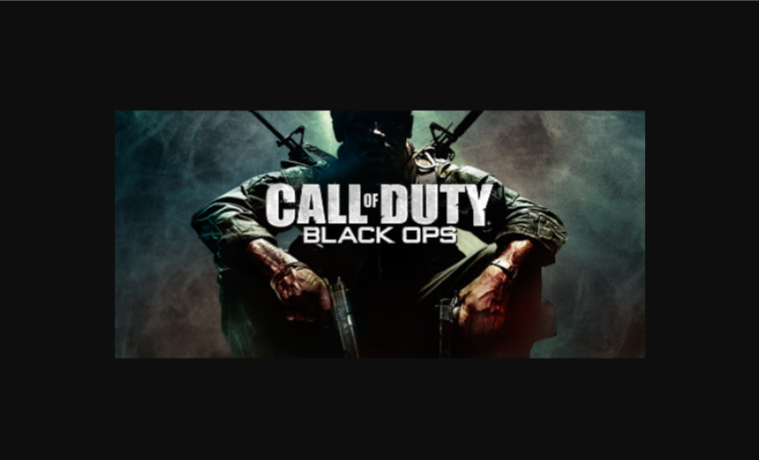
Here’s the thing folks slept on. Most of the story is being reconstructed through an interrogation. You aren’t playing missions so much as digging through a man’s cracked recollection while somebody with a rougher voice than yours pushes him to remember faster. Nearly every level is a memory, and memories, as anybody who has argued with a family member about who said what at Thanksgiving knows, are slippery little liars. Treyarch understood that. They built the whole experience on the idea that the narrator’s head was not a reliable place to stand.
Then came Viktor Reznov. My guy. Gravel voice, scarred up, dropping wisdom like a Soviet uncle who has seen too much snow and too much blood. He rides shotgun through Mason’s flashbacks, guiding him, naming enemies, telling him who has to die. Dragovich. Kravchenko. Steiner. The list becomes a prayer Mason repeats until it’s tattooed on his soul. You believe Reznov. Why wouldn’t you? He saved this man. He fought beside him. He feels realer than half the actual living characters.
And that’s the knife.
Because Reznov was dead. Had been for a long stretch of the timeline you were living through. The man riding along in Mason’s head giving orders was a ghost, a piece of psychological wiring somebody planted and somebody else never fully removed. The Soviets ran a conditioning program on Mason, tried to turn him into a sleeper, a weapon that walks around looking normal until the right sequence gets whispered and the trigger finger does what it was told. Reznov, the real one, got hold of that same programming and hijacked it. He couldn’t kill his enemies himself, so he rewired a captured American to do it for him, hiding his own vendetta inside the conditioning like a message tucked in a bottle.
Sit with how wild that is for a mainstream military franchise. The protagonist you steered through most of the campaign was a puppet, and the hand up his back belonged to a hallucination that was itself a smuggled revenge plot. You weren’t the hero saving the day. You were a loaded gun somebody else was aiming, and you spent hours thanking the phantom holding you.
Now let’s talk about the broadcast, the transmission, the endless recitation of figures that haunted the loading screens and the wall of a certain hidden room. Those weren’t set dressing. The broadcasts carried coded instructions meant to activate sleeper agents and order them to release Nova 6 across the country. Hudson and Weaver already had recordings of those transmissions. What they needed was Mason, because the Soviets had planted the ability to translate the sequences inside his conditioned mind. The whole tense back and forth, the flashing red room, the way that recitation gnawed at you, all of it was a man’s brain being pried open like a stubborn oyster while he fought to remember what the codes meant and where the numbers station was located.
I remember finishing it the first time and just sitting there. Controller down. Screen dim. Feeling like I’d been running through somebody else’s nightmare and only realized at the exit that the dreamer was me the whole time. Games rarely earn that. Movies barely earn that. The Manchurian Candidate did it. Memento did it. Get Out did it in its own way with the sunken place, that horror of your body still moving while your will gets shoved into a basement you can’t climb out of. Treyarch snuck that same dread into a product mostly known for teabagging and killstreaks, and somehow it worked.
What made it stick was the craft underneath the twist. The hallucinations weren’t a cheap rug pull tacked on at the finale. The clues were breathing in the margins the entire time if you were paying attention. Reznov appears where he shouldn’t. Timelines don’t quite line up. Characters react to Mason like he’s carrying something they can see and he can’t. On a second run the whole thing reorganizes itself in front of you, which is the mark of a story built with actual intention rather than shock for its own sake. Not every player caught it live. Plenty of us needed a forum thread and a homie explaining it before the pieces snapped together. That’s fine. Good mysteries reward the rewatch.
Here’s my honest gripe, and it’s less a gripe about that entry than a lament for everything after. Call of Duty returned to this well, especially with Black Ops Cold War, but it never recreated this exact feeling. The sequels chased spectacle. Bigger set pieces, more helicopters spinning out of the sky, more slow motion breaching. Fun, loud, absolutely. But loud isn’t the same as haunting. Later stories tried the “gotcha” structure, tried unreliable narration, tried to twist your understanding of who you were controlling, and a couple got close. None of them left me questioning my own perception the way that 2010 release did. None of them made the act of remembering itself feel dangerous.
Part of that is the franchise growing into a machine expected to satisfy an enormous global audience every year. You can’t build a slow, paranoid character study when the quarterly report demands a rollercoaster. I understand the business of it. Doesn’t stop me from missing the version of this series that trusted players to feel confused, to feel manipulated, to sit in discomfort instead of getting spoon fed a clean victory. That entry treated the audience like grown folks who could handle their own footing being pulled out.
There’s also something quietly heavy about who Mason turned out to be. A regular soldier turned into a vessel, his identity carved up and rewritten by governments on both sides treating him like equipment. As a Black man who grew up on stories about how power loves to reach inside people and turn them into tools they never agreed to become, that theme landed with extra weight for me. The horror wasn’t the gunfire. The horror was the erasure. Somebody reaching into your mind and deciding what you’d believe, who you’d hate, what you’d do with your own hands while telling yourself the choice was yours.
That’s the buried genius of it. Underneath the Cold War coat of paint, the real war was for a single man’s grip on reality. Every shootout was really a question. Is this true? Did this happen? Is the voice guiding me a friend or a splinter left behind by people who wanted me broken and useful? A shooter asking those questions in the middle of its own gunplay was rare then and feels damn near extinct now.
So yeah, I’ll say it plain. Later entries gave us prettier explosions and slicker menus and a multiplayer suite that ate years of our lives. What they never gave us again was that specific vertigo, that feeling of the floor of your own mind giving way beneath you. For all its rough edges, that 2010 title reached into the player’s head and left fingerprints. Everything since has been content to just entertain the hands. Give me the one that came for my perception. Give me the ghost, the chair, the recited code, the terrifying possibility that the hero was the crime scene the whole time.
That’s the one that stuck. That’s the one I still think about at two in the morning. And that’s the one nobody has managed to top.
Staff Writer; Jay Baker
An older blerd with a lifelong love for anime, comics, manga, and gaming… Writing for fans who still believe great stories can come from a screen, a page, or a controller…
He can be contacted at JayBaker@AfroGamers.com.