
(AfroGamers.com) Heads up before you scroll. Spoilers ahead for seasons one and two, plus the opening episodes of season three. If you are still catching up, bookmark this and come back.
Studio Bind came back on July 5th and did something sneaky. Instead of opening on Rudeus, season three handed its first hour to Eris, sweating in a sword sanctum, getting her whole personality beaten into shape by people who do not care about her feelings. Two full episodes of a woman deciding to become worthy of standing next to somebody. Then episode three swings around to Sharia, to the warm house, the wife, the second wife, the baby, the soft life our boy built out of nothing but trauma and grinding.
Notice what just happened. Eris left to change. Rudeus took a longer, messier road and eventually built himself a comfortable life. One of those transformations was deliberate. The other happened while survival, love and circumstance kept dragging him forward, and this season knows it.
Let me back up for anybody who only knows this show from Twitter arguments.
A thirty something shut in dies in Japan after a life of nothing. No job. No love. No dignity. His siblings throw him out of the family home after he refuses to attend his parents’ funeral, and he gets flattened by a truck while trying to do maybe his only decent thing ever. Then he wakes up as a baby in a fantasy world with memories intact, a body that works, magic talent bordering on absurd, and parents who actually want him. Cheat codes stacked on cheat codes.
Most isekai stops right there and lets you enjoy your buffet. Mushoku Tensei refuses. It is why people still argue about this series five years later, and it is why season three lands harder once you catch what it is doing.
Here comes an uncomfortable part. Truck killed a body. Truck did not kill a man.
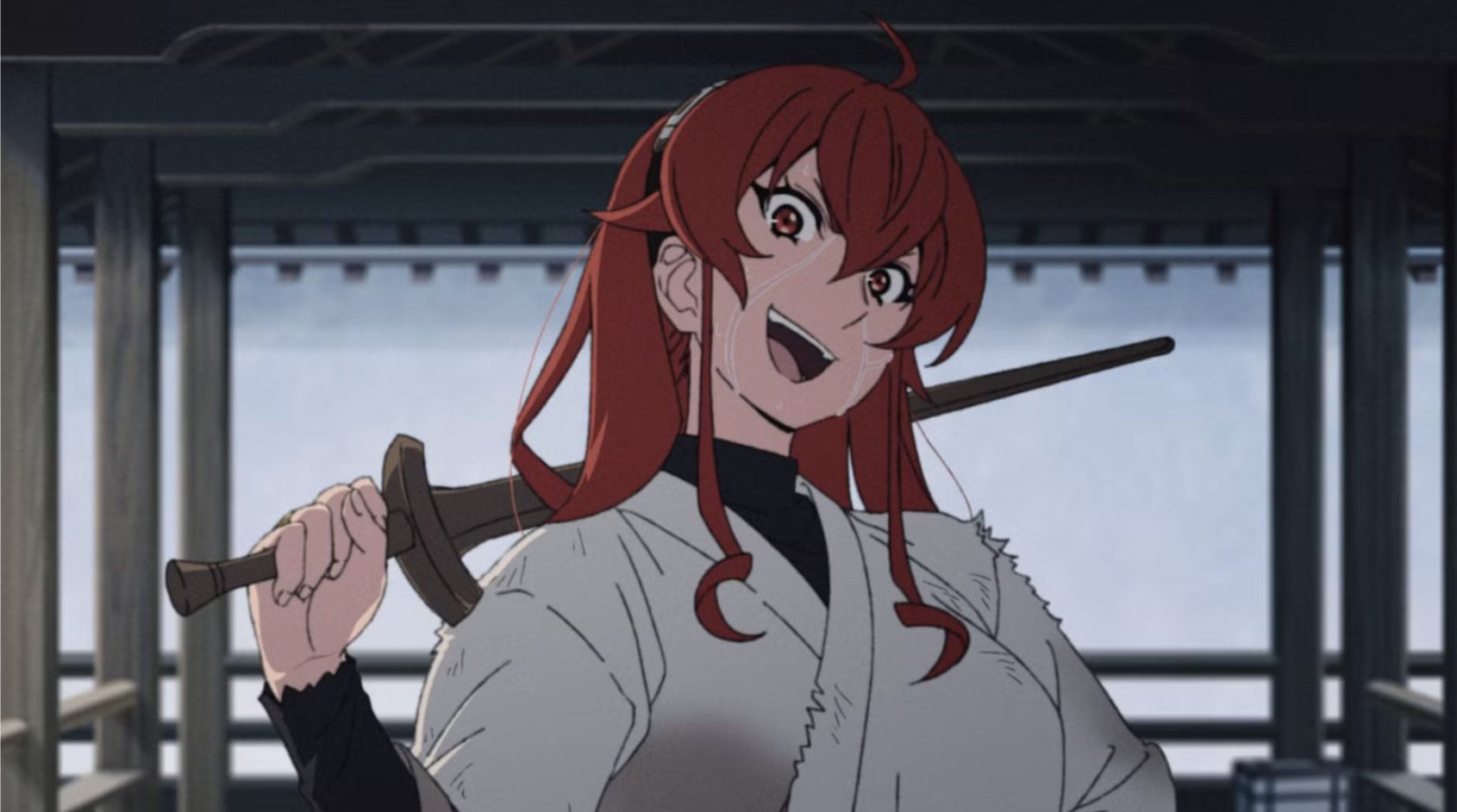
Think about how we talk about starting over in real life. New city. New job. Fresh cut, new fit, gym membership, whole glow up. We love a fantasy where geography equals character. Move away from the block and become somebody else. Except anybody who has actually done it knows better. You unpack the boxes and then you unpack yourself, and your same old coward is still in there, flinching at familiar things, running tired scripts under a brand new sky. My unc used to say you can leave a neighborhood but a neighborhood never leaves you. He was not talking about anime. He might as well have been.
Rudeus received a most extreme relocation. Different world, different body, different family, different rules of physics. And he still stole underwear. He still peeped. He still built his sense of worth around whether a woman would look at him. He still lied, hid, deflected, and crumbled once real pressure showed up.
Not sloppy writing. Just point blank honesty, and a fandom dismissing this show as gross often misses one thing: nobody here is defending him. A camera and a cosign are two different objects.
Look at his receipts across all three seasons. This kid is six years old with a grown mind and already scheming on Sylphiette. He is a teenager with world class talent who still cannot give Eris the emotional certainty she needs. The disaster in Fittoa scatters his family across a continent, and he spends stretches of his journey doing what he always does, which is retreat inward and let shame drive. Then Eris leaves and, for a while, he does not train, does not rally, and does not go after her. He curls up. Even after he forces himself back onto the road, the same wounded man remains underneath the adventurer’s coat.
His collapse remains the most honest thing in this entire franchise. A weaker story would say reincarnation fixed him. Instead we get a reset button nobody can find, plus a long look at what happens to men who believe otherwise.
Season two was rough on viewers for keeping him in that pit. Fans clowned his impotence arc online, but structurally it was brilliant, because his body finally did what his spirit had been doing across two lifetimes. Shutting down. Refusing. Failing at intimacy. He had to sit with it in front of somebody who loved him, and Sylphie did not magically repair him. She supported him, reassured him, actively helped him through the physical problem and, most importantly, came back after he woke up expecting to be abandoned again.
Which brings us to now.
Season three drops our guy into a version of life he always claimed he wanted. Married. Fathered. Respected in Sharia. Roxy under his roof, a childhood fantasy made flesh. Money coming in. Magic powerful enough to frighten nearly everyone who sees him use it seriously. On paper, arc complete. He won.
Watch the internal monologue anyway. His narration in these early episodes still sounds like a scared kid in a dark house checking every lock. He measures himself against a possibility of loss. He rehearses failure before failure arrives. He second guesses his worth inside a home where three people already decided he is worth it. One of the most gifted mages in Sharia, still talking to himself like a guy who got thrown out after refusing to attend his parents’ funeral.
His old voice never left. It got quieter, and quiet gets mistaken for gone.
Studio Bind knows this. Everything lined up after this point exists specifically to test whether growth was real or whether comfort was doing all of his heavy lifting. When a man is safe, warm, and fed, of course he seems better. Character is whatever survives once you take his comfort away. The threats are coming. Bigger names are moving somewhere beyond his peaceful little house. Somebody is about to pull his chair out from under him right after he finally got to sit down.
Now let me be fair to critics, since they are not wrong about everything. This series leans hard on women as an engine of his improvement, and there is a real conversation to have about how much emotional labor Sylphie and Roxy carry so a grown man can slowly stop being terrible. Fair hit. But I push back on any claim it presents such an arrangement as clean or earned. Roxy in particular gets written with her own interior life, her own insecurity, her own ambition, and she never exists as a reward. Women here stay inconvenient, and being inconvenient is more than most stories in this genre allow.
Deeper thing, though, is Paul.
Rudeus spent years judging his father as a failure, a philanderer, a man who could not hold his house together. Then Rudeus grew up and became a man with multiple wives, a temper he swallows, and a talent for disappearing when things get hard. Paul dying did not just cost him a parent. It cost him somebody he had been quietly measuring himself against so he could feel superior. And now here he stands, holding his own daughter, learning what he hated in his father was never a flaw unique to Paul. It was a pattern. It was inheritance. It was in his blood and in his mirror.
Fatherhood is the final boss of this story. No swordsman comes close.
Which is why it works even while being repellent, and it is often repellent. Rebirth never cleansed him. Rebirth just opened a door and held it. Whatever a man does after walking through remains on him, every single day, in small unglamorous choices nobody claps for. Rudeus gets no absolution, because absolution is not a mechanic in this world. He gets mornings. He gets decisions. He gets the chance to not be that guy today, then he has to do it again tomorrow, and again after, while his old self rides shotgun with his seatbelt off, waiting on any reason to grab the wheel.
None of this is a fantasy premise. It is Tuesday for a whole lot of us.
Season three is where the bill comes due. I would not miss it.
Staff Writer; Jay Baker
An older blerd with a lifelong love for anime, comics, manga, and gaming… Writing for fans who still believe great stories can come from a screen, a page, or a controller…
He can be contacted at JayBaker@AfroGamers.com.