
(AfroGamers.com) Let me start with a confession. I have lost entire Saturdays to two dudes screaming at each other in a rock quarry while the sky turns purple and somebody’s hair changes color for the fourth time. I loved it. I still love it. But somewhere between the Cell Games and whatever tournament arc is airing right now, I started noticing something that bugs me every single season, and I think a lot of us feel it even when we can’t name it.
Somewhere along the way we stopped writing bad guys and started writing stat sheets.
Think about how conversations go now. Somebody drops a new antagonist and within six hours the internet isn’t asking what he believes, what broke him, or what he wants the world to look like when he’s done. The timeline wants to know if he beats Goku. Whole channels exist for nothing but that math. There are men with families and 401ks arguing in comment sections about whether a fictional man’s punch could destroy a fictional galaxy, and I say that with love, because I’ve been that man. But when the loudest question about a character is always “how strong,” you eventually get writers who answer that question and skip the rest.
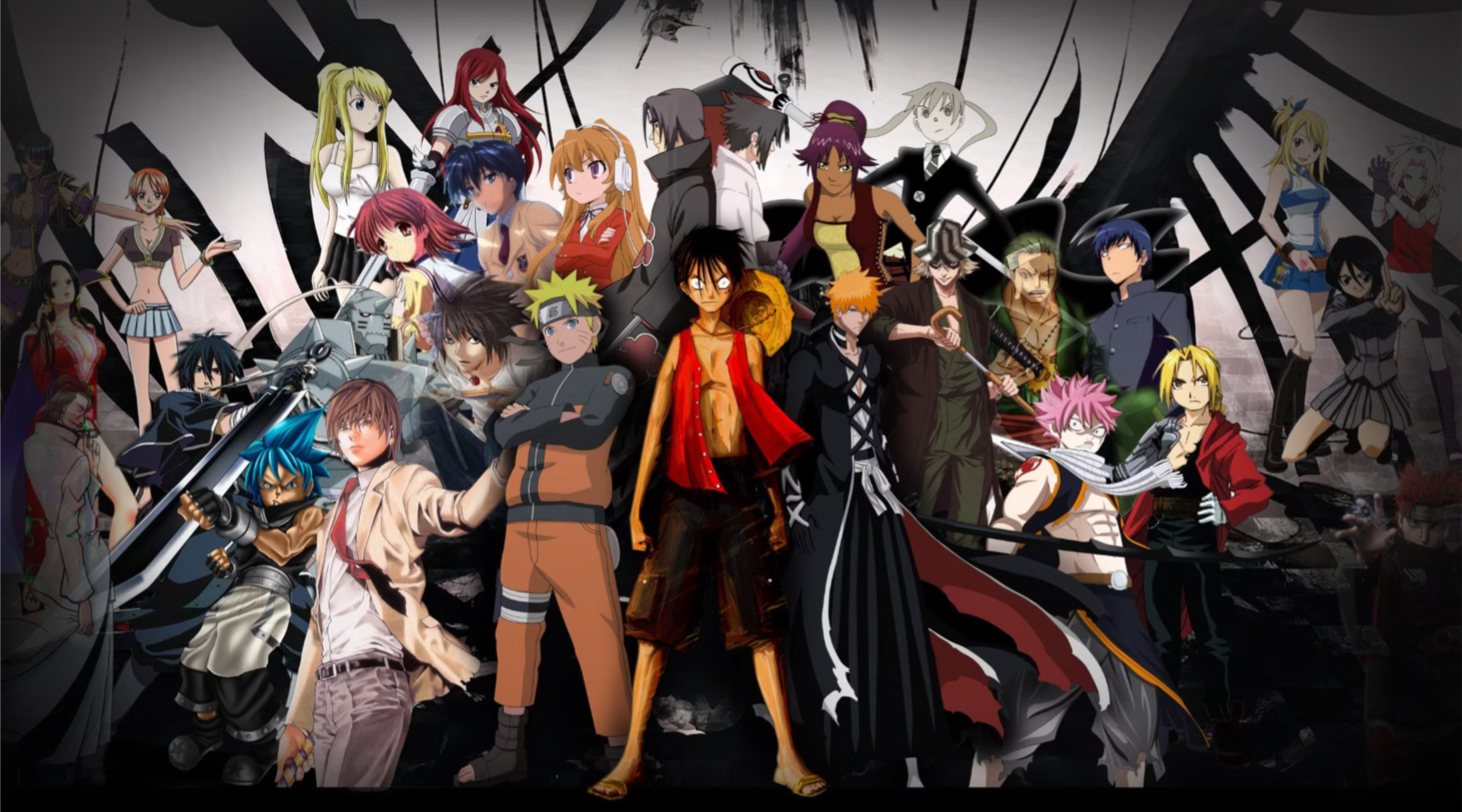
Here’s the thing though. The heavies we actually remember, the ones that lodge in your chest and stay there for a decade, almost never won us over with numbers.
Griffith didn’t scare anybody with his output. Griffith scared us because we watched him be charming, be brilliant, be a genuine friend, and then make a choice so cold that nearly thirty years later grown folks still can’t say his name without their jaw tightening. The terror of him is that he was reachable. There was a hand out, and then it wasn’t. No transformation sequence in the world hits like that.
Johan Liebert has no supernatural abilities. He’s a regular sized man in a sweater. Half the cast of Fire Force could take him, and honestly so could a determined middle schooler. Still one of the most frightening people ever animated, though, because his weapon is a conversation. Soft voice, patient eyes, and then he finds the one loose thread in your life, tugs it, and walks off while you unravel on your own. Naoki Urasawa understood something a lot of modern writers forgot. Dread is a writing problem, not a wattage problem.
Makishima in Psycho Pass sits in that same seat. Dude reads books, quotes philosophy, and calmly argues that a society running on predictive scores has already surrendered its soul. And the uncomfortable part, the part that keeps that show in rotation for me, is that he’s not entirely wrong. A monster with a point is still a monster, but the point doesn’t go away. Watching a Black audience process a story about a system that judges your potential for crime before you’ve committed one, that scans you and sorts you and decides what you are, well. Let’s just say Makishima’s argument lands different depending on who’s watching. A real adversary does exactly that, makes you check your own position before you check his.
Now compare that to the parade we’ve gotten used to. New arc, new guy, he’s got a tragic flashback that lasts ninety seconds, he says something about how the world was cruel to him, and then he grows six arms. He gets a form. Then another form. By the time he explodes into light, I couldn’t tell you a single thing he wanted besides winning. The flashback isn’t ideology. It’s paperwork. It’s the show filing a form so we know it’s allowed to feel sad for a second before the next beam struggle.
And I want to be fair here, because Dragon Ball catches strays for this and it isn’t entirely deserved. Frieza works. Frieza works because he’s not just strong, he’s an imperialist. Dude runs an operation. Planets get bought and sold under his name, entire peoples get logged as inventory, and the whole time his voice stays bored and pleasant, the tone of somebody who has never once been told no. That is a personality. More than that, it’s a political posture wrapped in a purple lizard. The problem isn’t Frieza. The problem is that a thousand shows copied his ceiling and none of them copied his attitude.
Toriyama understood that raw strength worked better when it came wrapped in an unusual personality. Buu behaves like a child, while Beerus is a catlike god who naps and cares about pudding. Those choices are weird on purpose. They’re personality first.
Look at what actually stuck from the big three. Everybody remembers Pain, not because of the Almighty Push, but because he stands in front of Naruto and lays out a cycle of retaliation that the show cannot easily refute. Pain says pain teaches, that hurt people hurt people, and that peace built on somebody else’s suffering is just a scheduled war. Kid me heard that in a dorm room and got real quiet. Aizen sticks because of the sheer audacity of the man, that reveal, that walk, that voice. The numbers had nothing to do with it. Man was already iconic back when he was playing a mild mannered captain in glasses.
Meruem is maybe the best argument I’ve got. Yes, he’s the strongest thing in Hunter x Hunter for a stretch. But nobody talks about Meruem because of that. We talk about him because a creature engineered as a weapon learns to play a board game with a blind girl and slowly, painfully, becomes a person. His arc is not escalation. It’s tenderness sneaking up on something that was built to have none. The ending of that arc is quiet. Two people sitting in a room. No screaming, no craters. It wrecked me more than any final battle I’ve ever seen.
So what happened? Part of it is the market. Publications such as Weekly Shonen Jump pay close attention to reader surveys, while the larger anime business depends heavily on licensing and merchandise. A scary silhouette with a cool new form sells figures. Ideology doesn’t fit on a keychain. Part of it is us, honestly. We rewarded the escalation, clicked the tier lists, argued the matchups, made all that versus content profitable, and studios noticed. And part of it is that writing a real adversary is just hard. Anybody can write a guy who hits harder. Writing a guy whose worldview survives contact with the hero’s worldview takes actual thought about what you believe.
Because that’s the secret. Your antagonist is a mirror. Whatever your protagonist claims to stand for, the opposition is the pressure test. If your hero says people can change and your big bad’s only argument is “no they can’t, watch me hit you,” you didn’t test anything. You just scheduled a fight. But if your hero preaches forgiveness and the man across from him is somebody the world genuinely never forgave, now you’ve got a story. Now the punches mean something, because they’re carrying an argument.
I think about Stain a lot for this reason. He is far from the strongest villain in his world, basically a knife guy surrounded by walking artillery. Yet an entire society cracks around him, because the question he asks lands, who’s actually a hero and who’s just employed, who’s saving people and who’s building a brand. Ideas travel when they’re true enough to travel. Long after his body count stops mattering, the question keeps moving.
There’s your standard. Not can he destroy a planet. Does his idea survive him.
So my ask for the medium is simple. Give me the guy I argue with in my head at two in the morning. Give me somebody whose logic I have to work to dismantle. Let him be physically unremarkable if that’s what the story needs. Let him lose the fight and win the point. I’ll take one Johan over a hundred final forms, and I suspect most of us would, once the spectacle wears off and we’re left holding whatever the show actually said.
Strength is the easiest thing to write and the fastest thing to forget. Conviction is what we’re still talking about twenty years later.
Give us somebody worth being afraid of for the right reasons.
Staff Writer; Greg Tucker
GT is an old-school blerd who loves anime, comics, manga, video games, and collecting indie Black comic books.
Contact him at: GregT@AfroGamers.com.