
(AfroGamers.com) Boot up a Game Boy in 1996, when Pokémon Red and Green first arrived in Japan, and you got a screen the color of pond scum. Four murky shades of green doing their best impression of color. It should have looked cheap. Instead, it felt like you were holding an entire world in your hands. No backlight either. You tilted the thing toward a lamp or leaned near a window just to watch Professor Oak explain his world. By the time Red and Blue reached American kids in 1998, those little monsters were ready to take over the schoolyard. Thirty years after Pokémon’s original Japanese debut, that memory carries real weight, and Red and Blue remain the reason a whole generation fell hard for a batch of pocket monsters Game Freak brought to life on Nintendo’s handheld.
Red and Blue gave you a fixed roster. One hundred and fifty-one creatures, and every single one earned a slot in your head. Kids could rattle off Bulbasaur to Mew without blinking. That number mattered because it was finite. You could work toward completing the original Pokédex, even if the elusive Mew remained a mystery to most players. “Gotta catch ’em all” wasn’t marketing fluff back then. It was a real goal you could see and chase down.
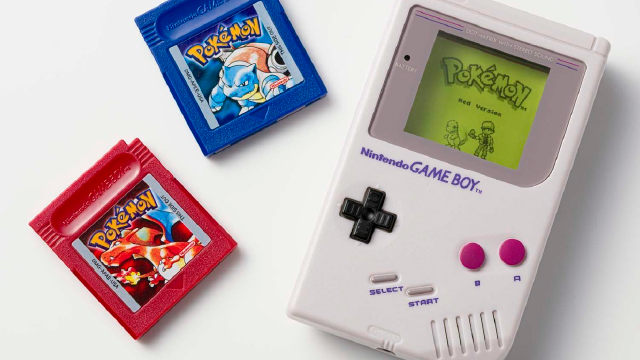
Here’s the clever part. Buy one copy and you literally could not fill your Pokédex alone. Red locked away Ekans and Arbok. Blue hid Sandshrew and Vulpix. Game Freak built the need for cooperation right into the design, then handed you the solution: a friend with the other box. Suddenly, the schoolyard turned into a marketplace. You needed people. That was the whole idea.
Which brings us to that gray cord. The link cable was a small miracle of plastic and copper. You plugged two handhelds together, sat shoulder to shoulder, and watched pixels stroll from one system to the next. No WiFi, no cloud, no account login. Trading meant showing up in person, sitting close, and trusting the other person not to yank the connection in the middle of an exchange. Anybody who lived through it remembers the panic of a bad link.
And oh, the stories. Every lunch table had a kid swearing up and down that he knew the truth. Move the truck near the S.S. Anne and Mew appears. Fill all 150 slots and something secret unlocks. Follow some mysterious sequence of button presses and the game rewards you big. Most of it was pure fiction, passed mouth to mouth like folklore. But that was the beauty of the era. Before you could Google an answer in two seconds flat, mystery had room to breathe. A single rumor could live for months.
Now here’s the twist that kept the whole myth machine running. A few of those tales weren’t tales at all. MissingNo., that garbled blob lurking off the Cinnabar coast, was the real deal. Follow the right steps, surf along the eastern shoreline, and collide with a corrupted mess of a sprite. Suddenly, the item sitting in your sixth Bag slot multiplied out of nowhere. Half the room swore it was a hoax right up until they watched it unfold on their own screen. That smear of broken code earned its legend status for one reason. People could actually prove it.
Strip away the nostalgia and the bones still hold. Combat ran on a rock paper scissors logic anybody could grasp in a minute yet spend years mastering. Fire beats grass, water douses fire, grass drinks up water, and the loop kept unfolding into deeper territory. The difficulty respected you. No coddling, no glowing arrows pointing the way. You got a town, a rival, a starter, and the freedom to explore Kanto, one new route at a time.
Speaking of that rival. Gary. Blue. Whatever you named him. He showed up right when you were low on potions and high on confidence, always with that grin, always with a team a notch above yours. Beating him settled something. And before any of that, you had to make a call nobody prepared you for. Bulbasaur, Charmander, or Squirtle. Folks still defend their pick like it says something about who they are. Charmander loyalists took the rough road early. Squirtle folks played it smart. Bulbasaur heads breezed through the opening two gyms and never once apologized for it.
What these carts kicked off is almost tough to measure now. A trading card empire. An anime that ran what felt like forever. A phone app in 2016 that had grown folks bumping into light poles chasing digital critters through the park. None of it happens without those original Game Boy adventures. Some guy named Satoshi Tajiri liked catching insects as a kid, and that hobby of his eventually helped inspire a franchise recognized around the world.
You’d think all that would bury the debut. Hundreds of new critters since, full color, 3D towns you can spin the camera around in. And yet the old one refuses to sit down. Some of that is just how firsts work. They dig in and stay. But it runs deeper than sentiment. Those early adventures asked you to imagine, to fill the gaps the hardware left wide open. Grainy sprites forced your brain to supply the coloring. Silence between chiptune bleeps left space for wonder. Tight limits sparked creativity in a way that polish sometimes smothers.
Three decades later, the pull hasn’t faded one bit. Somewhere right now a parent is handing a wide eyed kid a worn cartridge, watching them meet Oak and pick their first Pokémon, and the cycle keeps spinning. Those first 151 aren’t a pile of dead code rotting on old silicon. They’re the thing you and some kid you haven’t seen in twenty years can still bond over in a single sentence. A tiny gray box held a whole world once. Wild part is, boot it up today and the world’s still in there.
Staff Writer; Jay Baker
An older blerd with a lifelong love for anime, comics, manga, and gaming… Writing for fans who still believe great stories can come from a screen, a page, or a controller…
He can be contacted at JayBaker@AfroGamers.com.