(AfroGamers.com) Back in 1993, a whole slew of American children started absorbing Japanese storytelling logic every weekday afternoon, and not one of us had a clue. We figured we were just watching five teenagers with attitude stomp a rubber monster into the dirt. What we were actually getting was an early education in an aesthetic, one that would grab us by the collar years later when Toonami lit up the after-school block.
Picture the morph. Some regular-looking teen flicks a wrist, hollers a dinosaur name, and the screen detonates into motion and light. The backdrop drops away. Everything goes stylized, sharp, a little too intense for a Tuesday. That ritual, the pose, the flash, the suit snapping onto the body, comes from the same Japanese entertainment tradition that gave us Sailor Moon spinning into her uniform and pretty much every magical girl henshin ever committed to tape.
Here is the twist nobody dropped on us at recess. That program wasn’t merely inspired by Japanese entertainment from across the Pacific. It was built from the actual stuff, or at least its live-action cousin. Saban adapted footage from a long-running property called Super Sentai, mixed it with newly filmed scenes featuring California actors, and handed the whole package to Fox Kids like it grew in a Burbank backyard. The original Japanese series supplying much of that first season’s footage was Kyōryū Sentai Zyuranger, which premiered in 1992. So the family resemblance wasn’t some vibe we imagined. We were getting the actual imported article, chopped, repackaged, and dressed up in a Southern California hoodie.
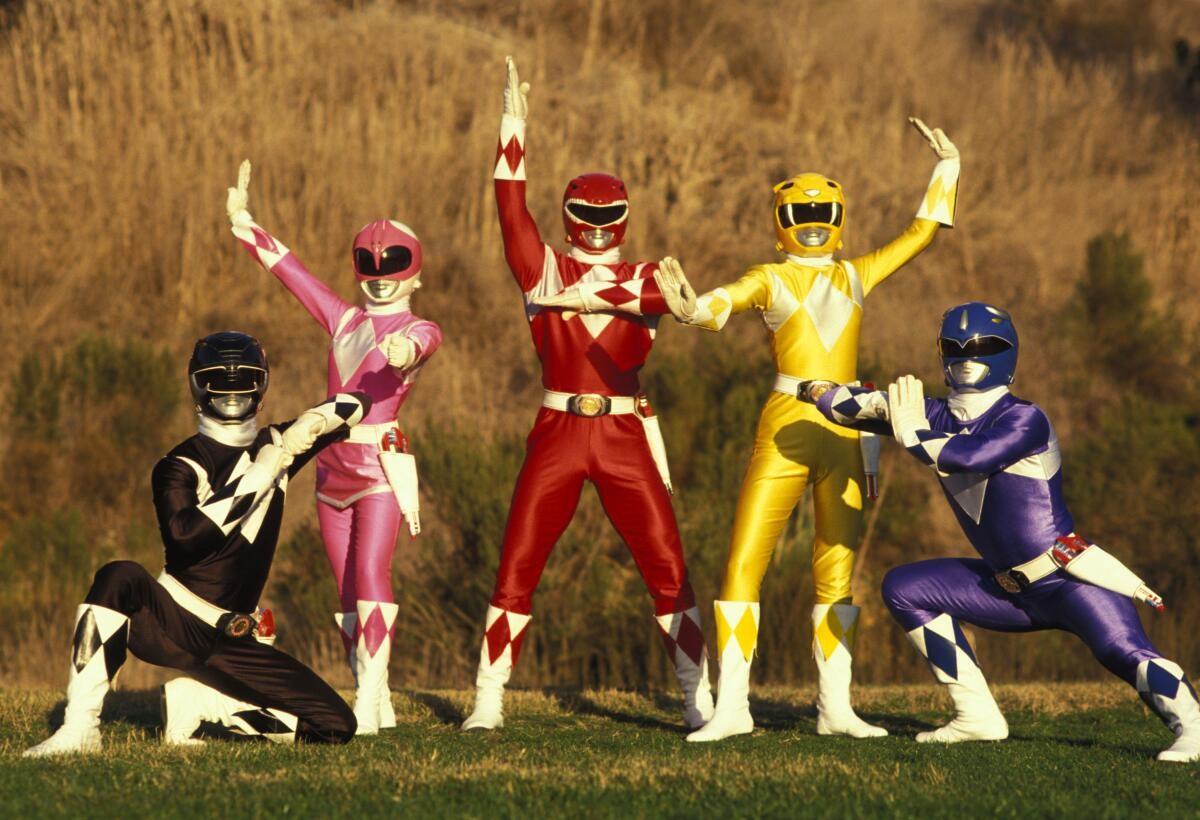
Purists will jump in right about now to remind everybody that Sentai is tokusatsu, live action with special effects, practical suits, and miniature sets, not drawn animation. Fair enough. Good luck selling that distinction to a seven-year-old clutching a plastic Blade Blaster. The two forms are siblings anyway. They share storytelling conventions, visual influences, and a deep love of things exploding for reasons that barely hold up.
Even the way the fights were cut felt foreign to our young eyeballs, though we lacked the words to say so. Quick zooms onto a shocked face. A dramatic pause right before impact. That habit of holding a heroic stance one beat too long so the tension could breathe. Plenty of domestic children’s programming had its own visual tricks, but Power Rangers brought a different rhythm into our living rooms. It moved differently, and something in us clocked the difference and liked it.
Then you had the mechs. Big, clanking, gorgeous machines that rolled out whenever the bad guy of the week decided to grow forty stories tall. The Zords would combine into one towering figure and throw hands with a kaiju in a downtown that suspiciously never had any pedestrians. If that setup rings a bell, it should. This is the mecha tradition, the same broad lineage running through Voltron, Gundam, and every piloted giant that ever formed up limb by limb while a hero screamed about saving the city. We learned to adore combining robots before we could spell Mazinger.
The squad itself taught us something too. Five heroes, each locked to a color, each bringing something different to the table. Red carried the leadership burden. Blue brought the brains. The others had their own personalities, strengths, and reasons to clash before coming together. That whole ensemble build, where a crew of specialists covers different emotional lanes and learns to work together, is bread and butter for the action stuff coming out of Japan. You can see similar storytelling conventions in the found families packing series like Naruto and My Hero Academia. The seed got planted early, right there in spandex.
Do not sleep on the antagonists either. Rita Repulsa cackling from the moon, Lord Zedd looming in his chrome and muscle nightmare of a costume, Goldar barking threats he could never back up. These weren’t disposable villains who vanished after one lousy afternoon. They schemed. They escalated. They took losses personally and crawled back nastier. That operatic, theatrical evil, the kind of monster who chews the scenery and treats every defeat like a fresh wound, was another dose of Japanese superhero storytelling. Put Rita and Lord Zedd in a room with Frieza or Aizen, and somebody is getting a lecture about world domination before the furniture starts flying.
The bigger tell was how the thing unfolded across weeks. Plenty of American cartoons back then smacked the reset button by the closing credits. Nothing shifted. Nobody grew. Next episode, same status quo, forever. Our dino warriors ran arcs instead. Members came and went. A Green one showed up as a brainwashed enemy, turned good, lost his powers, and eventually returned with a whole new identity as the White Ranger. Stakes climbed. History piled up and stuck around. That serialized momentum, the sense that yesterday actually mattered to today, would feel familiar to anybody who later fell in love with long-running shonen anime. We were already comfortable with it long before we knew the term existed.
The merchandise machine hummed right beside all of it, which is another page borrowed from the same playbook. Toys, cereal, lunchboxes, the works. Over in Japan, television programs and toy manufacturers had been working together for decades, with superhero shows and robot franchises helping sell the merchandise that kept the whole operation running. American children’s entertainment certainly had its own toy-driven franchises, but Power Rangers brought another version of that formula into our homes. We simply absorbed the output, begging our folks for a Megazord we would inevitably crack within a week.
Stack every bit of that in one pot and you understand why so many of us slid into the deep end once the genuine anime imports arrived. Toonami launched in 1997, Dragon Ball Z joined its lineup in 1998, and Gundam Wing followed in 2000. Suddenly, American kids were discovering a whole new world of Japanese entertainment, and plenty of adults seemed surprised by the enthusiasm. Surprised? We had been getting acquainted with some of those storytelling conventions since elementary school. The morphing, the mechs, the color-locked squad, the theatrical villains, the story that refused to forget itself. All of it had already carved grooves into our little brains through a delivery system wearing a homegrown mask.
Funny how that works. We thought we were just quoting “It’s Morphin Time” on the bus and arguing over who got to be Red. What we were really doing was picking up a language. So by the time somebody handed us a subtitled tape and said this is called anime, some buried part of us nodded like we had met it before. Because we had. It used to wear a helmet and swing a sword across a dusty television battlefield, and we loved it with our whole chest, never once suspecting how much of it had crossed an ocean to reach us.
Staff Writer; Jay Baker
An older blerd with a lifelong love for anime, comics, manga, and gaming… Writing for fans who still believe great stories can come from a screen, a page, or a controller…
He can be contacted at JayBaker@AfroGamers.com.