
(AfroGamers.com) There is a specific kind of quiet that settles over a grown man when a show he started watching as a young buck finally takes its bow. That is where plenty of us landed when My Hero Academia closed out its run and then walked away with Anime of the Year at the 2026 Crunchyroll ceremony in Tokyo. The Weeknd himself handed over the trophy, which felt like the culture nodding at the culture. For those of us who came up on late night Toonami and traded shonen recommendations in the barbershop, that moment carried real freight.
Let me back up for anybody who only knows the green hair from a cosplay at the cookout. The story follows Izuku Midoriya, a boy born without a Quirk in a world where almost everybody has one. Powerless in a society built entirely around power. If you have ever been the one in the room without the obvious gift, the one who had to study twice as long and grind three times as hard just to earn a seat at the table, then you already understand why this character grabbed so many of us by the collar.
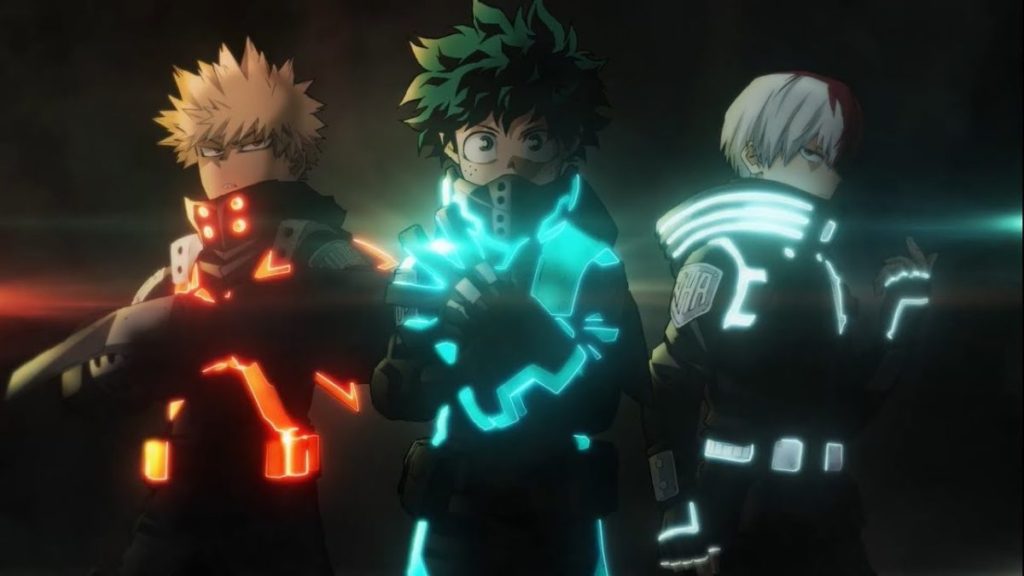
Midoriya does not get strong because the universe owed him anything. He inherits his ability from the closest thing his world has to a living legend, and from the first day he is breaking his own bones trying to live up to it. That image stuck with a lot of folks. A young dude shattering his fingers to hold onto a borrowed gift, scared to death he might waste it. Anybody who has carried somebody else’s hopes on their back felt that one land in the chest.
Here is what the closing stretch did so well, and why grown men were texting each other whole paragraphs at two in the morning. The series stopped pretending that saving people is ever clean. It leaned all the way into the cost. The mentor figure, All Might, spends the entire run pouring himself out until there is almost nothing left in the tank. He grins for the cameras while his body falls apart in private, because the public needs to believe somebody upstairs has it handled. Real ones recognized that picture instantly. That is every auntie holding a whole family together, every pops working doubles, every coach and teacher handing out strength they do not always have in reserve.
By the final arcs, the show asks a harder question than who wins the brawl. It asks what is left of a person after they give away everything they had. Midoriya does reach the mountaintop in the way his world needed. But the receipt is written in plain ink. The body breaks down. The borrowed power fades. The boy who once would have traded anything just to be special spends the back half learning that the cape costs far more than anybody mentioned at the start. The finale refuses to hand him a shiny prize and a sunset. It hands him a quieter peace instead, the kind you only reach after the bill has already been paid.
So why did this hit the younger crowd so hard in particular? Because they watched it grow up right alongside them. The first episodes dropped back in 2016, which means a twelve year old who pressed play then is a whole adult now with rent, a job, maybe a little one of their own. They did not simply watch a story unfold. They aged inside of it. When the credits rolled on that last episode, it was not just a cartoon wrapping up. It was a chapter of their own youth clicking shut, and that is a separate species of grief entirely.
There is also the plain truth of how massive the medium has become, and who is standing in the room now. More than seventy three million fan votes were cast this year, a number that buries every total that came before. Across recent Anime Awards shows, you have seen names like The Weeknd, RZA, Winston Duke, and Megan Thee Stallion step into the anime space without apology. The Black nerds who used to catch slick comments for loving this stuff are nowhere near the margins anymore. We helped build the center of it. Watching a coming of age tale about an overlooked underdog take the top honor, presented by an artist out of our own world, felt like a receipt for two decades of quiet devotion.
There is one more layer that lands different the older you get. The power at the center of it all gets passed from hand to hand, person to person, a literal chain of people choosing to give their strength to whoever comes next. That is the whole engine of the thing. A lineage. Each holder adds a little of themselves before handing the torch forward and stepping out of the way. Anybody raised by folks who poured into them so the next one could climb higher understands that math without needing a single subtitle.
The piece I keep chewing on is the promise baked right into the name. Being a hero is framed as a weight, never a flex. The show flat out refuses to sell the fantasy that doing right is easy, or that the powerful sleep soundly at night. Every act of rescue subtracts something from the one doing the rescuing. That is a heavy notion to hand a teenager, and yet teenagers are precisely the ones who needed to hear it, because they are the same kids being asked to carry their households, their blocks, and their futures, often with no special gift to lean on besides raw grit.
I think about my own little cousins watching this, the ones with big dreams and not a lot of cushion under them. A show told them, over years, that greatness is real and reachable, while never once lying about the toll. That is a rare and honest thing to put in front of a child. Most stories aimed at young people promise the glory and skip the invoice. This one made them sit with both.
When people ask why a Japanese cartoon about super powered students left a bunch of grown Black men misty during an awards broadcast, the answer is not complicated at all. We saw ourselves in the boy who had nothing and chose to give everything anyway. We saw our elders in the man who smiled clean through his own decline. We saw the price up close, and we recognized it on sight, because plenty of us are paying a version of that same bill right now.
The series earned its trophy, no question. More than that, it earned the long silence that follows the last frame, the one where you just sit there with a dark screen and let the whole thing settle into your bones. Ten years, one underdog, one borrowed gift, one heavy crown. That is what a legacy actually looks like. And the boy who started with empty hands ended up teaching an entire generation that the truest measure of a savior is never the strength itself, but what you are willing to lose in order to use it right.
Staff Writer; Jay Baker
An older blerd with a lifelong love for anime, comics, manga, and gaming… Writing for fans who still believe great stories can come from a screen, a page, or a controller… He can be contacted at JayBaker@AfroGamers.com.