
(AfroGamers.com) So Hood Warfare 2 dropped on October 8, and my timeline split clean down the middle like somebody took a machete to it. Half my people are crying tears, quoting the dialogue, posting clips of those wild shootouts like it’s the funniest thing since Friday. The other half? Big mad. Calling it modern minstrelsy with a controller. Both camps swear they got it figured out. Me, I’ve been thinking about it since launch night, and I keep landing in that middle spot where neither side wants to meet you.
First, the basics. Trapstar Games developed and published this sequel, bringing its street shooter formula from Detroit to Chicago. This ain’t some sprawling story about a young brother trying to survive the neighborhood. It’s a multiplayer first-person shooter built around rival gangs, customizable weapons, and six competitive game modes. Turf War has players fighting for territory. Hit A Lick sends crews after the other team’s bag, while Chain Snatch turns collecting chains from fallen opponents into a scoring opportunity. You can shoot it out downtown, battle through the suburbs, or take the fighting inside Chicago Mall. The developers have taken the familiar multiplayer shooter formula and wrapped it in exaggerated street culture. Depending on who you ask, that’s either the joke or the whole problem.
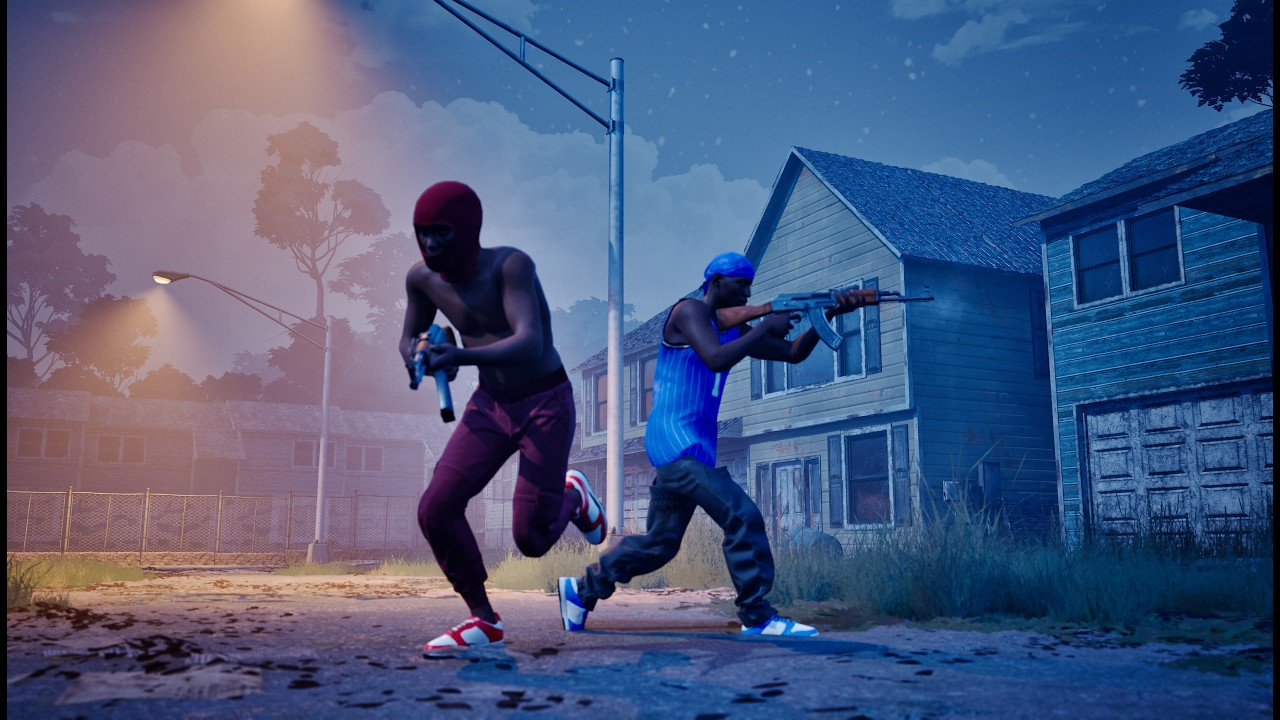
Here’s where the comedy comes from, and I’m not gonna pretend it isn’t real. For a lot of us, pieces of this world feel familiar, even through all the exaggeration. Not the violence part, the texture. The neighborhood setting stirs up memories of aunties yelling across the block, along with that one dude who sells loosies and knows everybody’s business. Then there’s the barbershop that doubles as a courthouse on Saturdays. Those memories are part of the world its imagery calls to mind. When you grow up somewhere the industry usually ignores or sanitizes, seeing a familiar environment rendered in a video game hits different. It’s recognition. Representation, even when it’s exaggerated, scratches an itch that decades of fantasy castles and space marines never touched.
And the jokes? Some land genuinely sharp. The comedy we make among ourselves has always been a survival tool, the thing that lets us laugh at the absurd so it doesn’t crush us. We clown our own circumstances because we lived them, and that laughter belongs to us. When one of mine riffs on the chaos, I’m cracking up too, because we both feel the ache underneath the punchline. We earned the right to laugh. That’s the difference. Still, Hood Warfare 2 pushes that humor into uncomfortable territory. Turning street violence into killstreaks, complete with snitches spotting enemies and drive-by attacks, raises questions about what exactly we’re supposed to find funny. The joke might land differently when somebody remembers the real families who have buried loved ones because of that same violence.
But flip the camera around. Picture a 19 year old in Ohio who’s never set foot south of his own cul-de-sac, controller in hand, treating that same block like a safari. He’s not necessarily thinking about the people who actually live there. Dude might just be laughing at a cartoon somebody sold him and labeled authentic. That’s the part that turns my stomach, and it should make anybody paying attention uncomfortable. Context changes the way humor lands. The identical joke can feel like catharsis to one person and cruelty to another. It depends on who’s holding the sticks and whether they see human beings or NPCs wearing our faces. I’m not saying everybody outside the culture is incapable of understanding the humor. I’m saying there’s a difference between recognizing the humanity beneath a joke and enjoying a stereotype because you believe it tells the whole truth.
This ain’t new, by the way. Gaming has danced with the question for ages. Def Jam: Fight for NY handed us hip-hop royalty throwing hands, and we ate it up because the whole thing carried swagger, personality, and a genuine affection for the culture it borrowed from. Grand Theft Auto: San Andreas still gets debated to this day. CJ’s arc means one thing in my house and something else two doors down. That game gave its central character family, loyalty, betrayal, ambition, and a complicated relationship with the streets that raised him. Hood Warfare 2 isn’t trying to tell that kind of story. It’s selling fast matches and outrageous humor, which is a different creative goal altogether. So the real issue with this release was never whether street life can show up in a game. Course it can. The harder ask is whether this game actually believes in something, or whether it just borrowed the aesthetic for a weekend and plans to give it back.
That belief part matters way more than folks give it credit for. Satire punches with intention. It knows what it’s critiquing and why. At its best, it has something to say about the systems that shape these neighborhoods and then blame the folks trapped inside them. Caricature just gawks and giggles. One honors your intelligence, while the other hands your worst days to a stranger as a toy. Trapstar Games makes clear that Hood Warfare 2 is fictional entertainment and doesn’t promote real gang violence. Fair enough. But a disclaimer doesn’t automatically settle the question of racial stereotypes or cultural responsibility. From what I’ve seen, Hood Warfare 2 keeps slipping between humor that feels familiar and exaggeration that feels careless. The arguments surrounding the game reflect that tension. That’s exactly why the discourse refuses to settle.
Then you got the money, and money always deserves a closer look. Hood Warfare 2 sells for $5.99 on Steam, so we aren’t talking about some expensive blockbuster trying to squeeze seventy dollars out of everybody’s pockets. But a small price tag doesn’t erase the bigger question. Who gets to profit from this version of Black street culture? Trapstar Games is publicly listed as both developer and publisher, yet the identities and lived experiences of the people behind the studio aren’t clearly established. I’m not about to assign anybody a race or background without evidence. Still, representation behind the scenes matters. If the people creating these games understand the communities they’re portraying, that’s one conversation entirely. If they’re simply turning stereotypes into a product because controversy brings attention, now we’re talking about a different beast. Follow the dollar, ask who’s telling the story, and pay attention to how the people being portrayed are treated along the way.
My biggest gripe isn’t even the exaggeration. Every genre bends reality, and cranking the dial is what these things do. What gets under my skin is the flattening. Reduce an entire people to one setting, one hustle, one way of ending up in a body bag, and you’ve erased everything else we are. We got scientists. We got preachers. We got some teenager up the way who’s writing code in three languages before his momma calls him for lunch. Now, I don’t expect a multiplayer shooter about gang territory to suddenly become a documentary about Black achievement. That would be ridiculous. But when games repeatedly draw from the same narrow collection of stereotypes, the larger picture starts looking mighty small. Pain moves units. Complicated don’t. That kind of repetition can do quiet damage, shaping how outsiders see us long after the computer shuts down. One game doesn’t carry responsibility for every negative portrayal that came before it, but that doesn’t mean it gets a free pass either.
Still, I won’t sit here telling grown adults they’re wrong for enjoying it. That’s not my place, and it’s kinda rude honestly. Plenty of players are having a good time with Hood Warfare 2, and the positive reception on Steam makes that much clear. Enjoying a ridiculous shooter doesn’t automatically mean somebody endorses every stereotype wrapped around it. If you look at this game and find something funny, familiar, or entertaining, I’m not about to take that from you. Telling a grown man how to feel about his own experiences is disrespectful in its own right. What I will say is this: hold two thoughts at once. You can treasure the recognition and still side eye the packaging. Finding something hilarious and calling out what’s rotten inside it aren’t opposites. They’re part of being a thinking person who refuses to be flattened into a single sad sprite.
So where do I land? Right in that uncomfortable middle I mentioned up top. This sequel isn’t pure celebration, and I don’t think every joke deserves to be labeled pure slander either. It’s a mirror held by hands I don’t fully know, reflecting something familiar through a lens that sometimes turns real hardship into an easy punchline. One moment, the humor feels like an inside joke. The next, you’re wondering whether the people behind it understand what they’re asking everybody to laugh at. That uncertainty is part of the problem. We can appreciate the energy of a game without pretending every creative choice deserves applause. We can question its intentions without declaring everybody who enjoys it some kind of traitor to the culture. Grown people can handle that kind of conversation, and we deserve the respect of being trusted to.
The move isn’t to ban the thing or crown it king. Better play is staying loud about what comes next. More studios with us in the room, not just on the screen. More Black creators getting the opportunity to build games around their own experiences. Stories about neighborhood struggles, science fiction, fantasy, or worlds nobody has even imagined yet. More characters who get to be complicated human beings instead of walking collections of familiar stereotypes. Let the block be the opening chapter of somebody’s arc instead of the whole tragic ending. Until that day comes, laugh if it tickles you. Rage if it stings. Just don’t let anybody tell you those two reactions can’t live in the same body. They been sharing space in us a long time. Maybe that’s the most Black thing about this whole mess.
Staff Writer; Jay Baker
An older blerd with a lifelong love for anime, comics, manga, and gaming… Writing for fans who still believe great stories can come from a screen, a page, or a controller…
He can be contacted at JayBaker@AfroGamers.com.