
(AfroGamers.com) Deep into my second night with this thing, I parked on a rooftop. Sunrise did something close to holy over the bay. And I caught myself admiring it instead of playing it. Critics had already crowned it. 99 on Metacritic, tied with Ocarina of Time on paper but ranked ahead by the site’s internal calculations. Thirteen years of waiting ended in a coronation. So here I sit, the odd one out, controller in hand somewhere in Leonida. Feeling something I did not plan on. A little bored.
Saying it out loud stings. Bored, about the most anticipated release the medium ever cooked up. Not the whole time, understand. Those first hours hit like a fever dream. Miami heat shimmered off wet asphalt. Neon bled into puddles. Pelicans drifted over the marina while two lovers schemed their next bad idea. Jason and Lucia land as actual people, not props. Manni Perez already earned an award nod for Lucia. You get why in minute one. Rockstar built something gorgeous. Nobody with working eyes argues otherwise.
Trouble shows up the moment you stop staring and start doing.
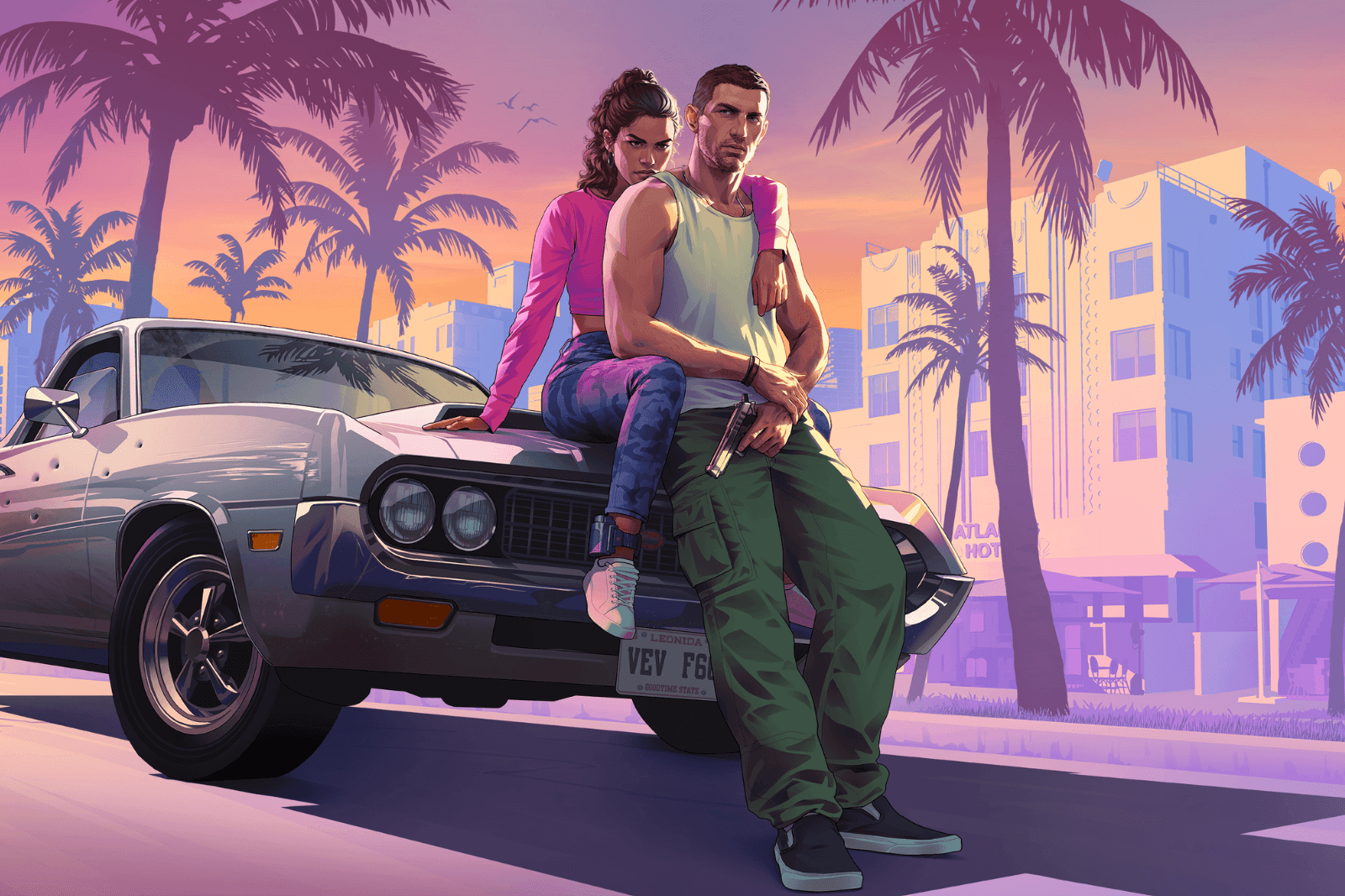
Missions still run on the same old rails. You roll up to a marker. A cutscene lays out the job. Then the game demands you finish the objective one exact way. Step outside the script and it scolds you. It yanks you back and flashes a fail. For a franchise that sold itself on freedom, that leash sits tighter than ever. This studio spent a decade making puddles reflect right. They taught NPCs to argue over parking. Yet the verbs you actually perform barely moved past 2013.
Think about what used to hook you. Finish a job, then catch a dumb idea. Boost a cop cruiser just to see what happened. Each run became a test of how far those bad decisions could spiral before everything fell apart. Sirens stacked up in pursuit. Strangers scattered or swung back. Physics turned every near miss into comedy nobody wrote. Chaos like that was the whole soul of it. Missions were the excuse. The sandbox was the point.
Leonida, for all its beauty, behaves more like a diorama than a playground. Stunning to look at. Oddly resistant to being messed with. Some early players have raised similar complaints about the freedom its open world actually offers. Despite all that detail, the place can feel strangely empty. Mischief seems sanded down, and old liberties are harder to find. You can admire a sunset over the bay for twenty minutes. Then you remember you showed up to cause problems. And the systems keep nudging you toward obedience instead.
Here is the part that really gets me. It runs at 30 frames per second. Every console. There is no performance mode offering 60 FPS, not even on the pricey PS5 Pro. In 2026. Rockstar chose fidelity over feel. More pores and polygons, less of the crisp response that makes mayhem satisfying under your thumbs. Racing sequences should sing. Instead, the action feels sluggish beneath all that visual polish. A tradeoff like that tells you where the priorities sat.
And honestly, this is bigger than one release. We have trained ourselves to confuse fidelity with joy. A reviewer sees a city block rendered down to the cigarette butts, then reaches for the word immersive. As if photorealism were a gameplay mechanic. Bruce Straley helped shape The Last of Us. He recently criticized the repetitive gameplay found in big budget titles, questioning why stunning visuals so rarely come with fresh ideas. His point was not about this specific title. It was about an industry increasingly comfortable with spectacle while genuine innovation struggles to keep up.
Maybe that curve helps explain why the numbers read 99. Meanwhile plenty of folks quietly wonder when the entertainment kicks in. Some critics spent around a hundred hours exploring Leonida, and their praise deserves consideration. Still, glowing reviews cannot erase the disappointment other players might feel once the honeymoon ends. Millions will run out of marina sunsets. Then they start asking what there is to do. Fidelity ages fast. Good gameplay can keep you grinning long after the visual novelty fades.
I keep circling back to a plain question. Did the studio forget what people came for? Technical bragging rights were never the draw. Neither was a tech demo you could mistake for a Pixar backdrop. We came for the dumb, gleeful anarchy of turning a living city into our own ridiculous story. The thrill was breaking things the designers never saw coming. Somewhere across those thirteen years, that instinct got lost. Ambition, spreadsheets, and the pressure to justify a rumored billion-dollar budget took over.
None of this makes it a failure. That is the cruel twist. It is a stunning achievement and a muted toy at once. Underneath, a technical flex that now and then remembers it should be a good time. Call it a beautiful disaster, stranger to review than a plain flop. You dismiss a flop. This one you mourn a little. Talent is obvious. Money poured into it. And the result still fumbled the assignment.
Maybe updates loosen the leash. If Rockstar eventually introduces an online mode, it might hand the anarchy back. Players could write their own mischief again. I hope so. Those bones are there, under all that lacquer. For now, though, I will say the line nobody at the coronation wants to hear. Leonida is gorgeous to photograph and a chore to inhabit. Vice City deserved a sandbox, not a showroom.
Give me janky. Bring back stupid decisions, stolen jets, reckless chaos, and a town that fights back. I would trade a thousand reflective puddles for one afternoon of that.
Staff Writer; Jay Baker
An older blerd with a lifelong love for anime, comics, manga, and gaming… Writing for fans who still believe great stories can come from a screen, a page, or a controller…
He can be contacted at JayBaker@AfroGamers.com.