
(AfroGamers.com) Back in the days before streaming, getting your hands on good Japanese animation was practically a scavenger hunt. You caught Toonami after school and stayed up for Adult Swim long after your folks drifted off. Swapping grainy VHS copies with the one friend whose cousin knew a guy with the good tapes became a ritual. Fan subtitles ran a half beat behind the mouths and the picture flickered, yet nobody complained once. That struggle baked itself right into the love of it. When a great series finally reached your television, you guarded it like treasure because tracking it down had taken considerable effort.
Those of us who came up during that era carry a certain bias. I will own mine without blinking. The newer titles look gorgeous. No argument there. Studios today push light across a frame in ways the early masters could only dream about. Yet so much of that gloss sits on top of writing that forgets to make your heart move. The ones I keep circling back to understood the reverse. Flash was the seasoning. Story was the plate. Three in particular shaped a generation and still refuse to wrinkle decades on.
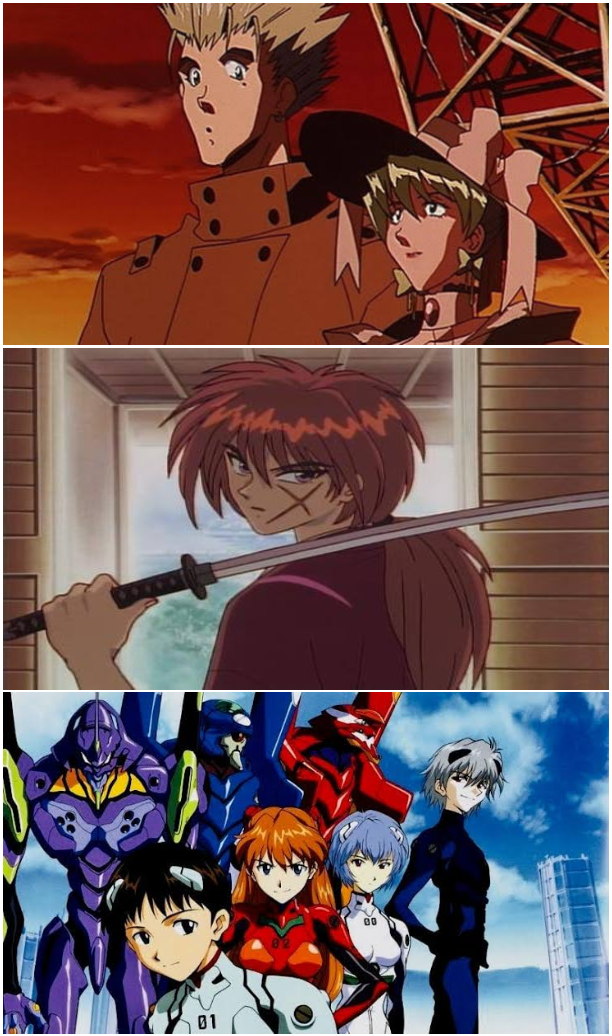
#1 belongs to Neon Genesis Evangelion (1995). Fair warning though, this pick will mess with your head. On the surface it wears the costume of a giant robot adventure. Teenagers climb into towering war machines to battle mysterious creatures known as Angels. Hideaki Anno had zero interest in the usual power fantasy. He aimed the entire thing inward instead. Far from a conventional hero, Shinji Ikari was a scared and lonely boy desperate for his father’s attention, while the battles laid bare a mind slowly unraveling.
The mechanical showdowns hit plenty hard. The real combat happened at the kitchen table and inside therapy-shaped silences. Depression. Trauma. The terror of being truly known by another person. Anno put all of it on screen with a rawness that still feels startling. Yoko Takahashi’s opening theme, “A Cruel Angel’s Thesis,” became an enduring karaoke favorite. The controversial finale sparked debates among fans for decades, a testament to how deep its hooks sank. Few works this popular have ever dared to be this uncomfortable.
Rurouni Kenshin (1996) slides in at #2. It is a samurai tale with a scar earned in blood. Kenshin Himura once cut down men as a legendary assassin. Now he wanders Meiji-era Japan swearing off killing, carrying a reverse blade sword designed to defeat opponents without taking their lives. That single choice powers everything. Every clash forces the same question. Can a person who has done monstrous things truly become someone new? The show could swing from gentle comedy to genuine dread in a heartbeat without feeling cheap. Noriyuki Asakura’s score blended traditional Japanese musical influences with rock and orchestral arrangements. The Kyoto arc contains some of the tightest action ever storyboarded.
Trigun (1998) rounds things out at #3 and it might fool you at first. Early on it plays like a silly desert romp. There is a bounty of sixty billion double dollars on a blond gunman, with slapstick flying everywhere. Then the floor drops out. Vash the Stampede is a grinning doofus and donut fiend. Beneath that goofy exterior is a pacifist carrying unimaginable grief, struggling to honor his vow against killing even when the world keeps handing him reasons to abandon it. The second half goes pitch dark. It wrestles with mercy, vengeance and what it costs to cling to your ideals. Tsuneo Imahori’s spaghetti western guitar lent the ride a dusty, aching soul you can hum years later.
Waiting between episodes became part of the experience. Binging twelve hours on a whim was a fantasy for most television viewers. You watched whatever episodes the cable gods offered, then lived with those stories until the next broadcast. That gap gave your imagination room to wander. Arguments broke out at the lunch table over who would win. Cliffhangers replayed in your skull during third period. Anticipation turned casual watching into devotion.
Take all three apart and certain shared qualities begin to emerge. The hand-drawn artwork carried little imperfections that gave each series a personality of its own. A slightly crooked face at the peak of a climax hit harder than any spotless digital render ever will. Music never faded into wallpaper either. It stepped forward, demanded your attention and stuck for life. Rhythm had room to breathe as well. Episodes allowed tension to build through moments of silence before delivering the payoff.
These stories also respected the intelligence of their audiences. Death carried weight. Grief hung around for a while. Victory often came at a terrible price. That honesty explains why adults still trade quotes, cosplay at conventions and share these classics with their children. Entire communities bloomed around midnight broadcasts, often trading worn VHS tapes among friends. Those bonds outlived the original television runs. You can trace a line from those fuzzy cable signals to the enormous fandom thriving across the planet right now.
None of this says the fresh wave rings hollow. Plenty of recent heavy hitters aim for true emotion and connect dead center. Demon Slayer moves like a living watercolor. Frieren handles loss with a tenderness the elders would tip their caps to. The sharpest of the current class carry forward the storytelling traditions of their predecessors. So I keep wandering back to the originals. It is not pure stubbornness. They just nailed one plain truth early on. Those older works asked for patience and repaid it with scenes that resurface in your mind years down the road. A tale that lodges in your chest will outlast any passing fashion in the artwork. Cue up a dusty title tonight and see how well it holds up. The wonder was never buried in the pixels. It lived inside the people bold enough to make you care.
Staff Writer; Carl Davis
This bro has always been into gaming, anime, manga, old-school sitcoms, and just about anything connected to nerd culture. A proud Black blerd for life, CD enjoys writing about the shows, games, and characters that have stayed with him over the years.
Feel free to drop him a message at CarlD@AfroGamers.com.