
(AfroGamers.com) Somewhere along the way folks started talking like Vegeta drew up the whole blueprint himself. Arms crossed, that smirk, the grudging little nod when the hero finally pulls ahead. Ask around who built the proud opponent and the Saiyan prince gets the credit like he filed the paperwork. Respectfully, nah.
Truth is, the idea was already breathing years before he ever crashed onto Earth talking reckless. It just wore different clothes, because opposition back then wasn’t a checklist you ran down. It was a worldview.
Start with the Red Comet.
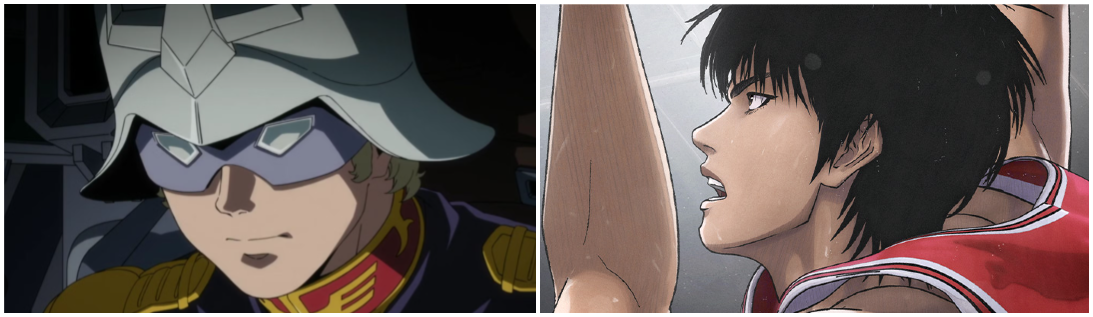
Char Aznable rolled through Mobile Suit Gundam in 1979, gliding behind a mask, moving three times faster than any pilot had a right to. People hold onto the crimson machine and the flash. What slips their memory is the why. Aznable wasn’t chasing Amuro to prove who logged more hours in the gym. Instead he was hunting the family he blamed for his father’s death, burying his real name, working both ends of a war so a revenge plot could wear a revolution’s face. His beef ran on grief and politics. Class, bloodline, betrayal, all of it braided into one aristocratic figure who’d smile warm while sketching your funeral.
That’s the texture the modern mold sanded away. His quarrel with the hero meant something off the battlefield. Pull the man out of the cockpit and he stays dangerous, still scheming, still carrying a plan bigger than any single duel. Later shows chased that ghost so hard that fans coined a name for the copycats, the Char clone, which tells you plenty. You don’t spawn a whole archetype by beeping a scouter. You do it by mattering.
Go back further still. 1974. Space Battleship Yamato flings a patched together crew across the galaxy, and parked out there waiting is Dessler, lord of Gamilas, blue as the cold vacuum around him. Opens as the enemy, no asterisk. No secret soft heart, no misunderstood childhood montage. Dude tries to wipe humanity off the map.
Then something strange creeps in. As the campaign drags on, he starts seeing that ragged crew as worthy. Not as future allies. As people who earned his regard by how they stood when everything burned. When the story finally lets him shift, it isn’t because he dropped a tournament bracket and had to choke down the loss. A warrior simply recognized another one across enemy lines. Down the line, that saga even brought him back on the side of the ship he once hunted, and it never felt cheap, because the honor was baked in from the jump. That ancient code, where you can want a man gone on Monday and salute him come Friday. Try folding that into a training montage. It splits at the seams.
Now flip to the one who needed no superpowers to make a rivalry burn. Kaede Rukawa, Slam Dunk, drifting onto the hardwood in the early 90s with his eyes low like the entire world bored him stiff. Basketball was his only religion. Sakuragi couldn’t stand the sight of him, partly over a girl, mostly over ego, and that friction set the whole squad ablaze.
Here’s the sneaky brilliant part. Both of them pulled on the same jersey. One team. Their competition wasn’t champion against threat, it was two starving teenagers clawing for the same oxygen, shoving each other toward heights neither could touch solo. No strength readings. No planet on the chopping block. Just sweat, wounded pride, and a jump shot dropping clean. Tension bubbled up from inside the huddle, which somehow ran hotter than any galaxy ending showdown ever managed. A sports story pulled that off with nothing but a scoreboard and two hard heads, which is arguably braver than anything with a spaceship.
So what actually shifted?
Shonen’s boom took a rich, tangled notion and ironed it flat into a pattern you could set a watch by. Enemy becomes friend. Friend becomes measuring stick. Everybody levels up on schedule, the arrogant one stews, then bends his knee just enough to link arms for the final boss. Satisfying stuff, I won’t front. That Saiyan pulled it off better than nearly anybody, and his peak moments still land like a freight train, the sacrifice against Majin Buu, a heel who took a hundred episodes to soften. Day ones remember exactly where they sat.
Doing a thing beautifully and inventing it are two separate acts. He polished a narrow cut of the concept and never fathered it.
What quietly died when the pattern hardened was range. Aznable’s version was political. Dessler’s was moral. Rukawa’s was raw competitive fire between two boys who couldn’t share a room yet needed each other badly. Not one of them leaned on a power ranking to carry weight. Their arrogance sprang from somewhere real, meant something, cost something back.
This whole medium had already wrestled the heavy questions to the ground. Why do prideful men throw down? What price does respect carry? Can you salute somebody while trying to erase them? Those stories trusted the audience to sit in the discomfort without a number crawling across the screen to translate it.
The prince stays a classic, no argument. Love him loud, no shame in it. Just quit slipping him the deed to a house other builders raised brick by patient brick, decades before his hair ever flashed gold. Proud challengers were walking around fully alive and gloriously complicated long before that smirk calcified into a genre rule. We simply quit looking back far enough to catch it.
Staff Writer; Greg Tucker
GT is an old-school blerd who loves anime, comics, manga, video games, and collecting indie Black comic books.
Contact him at: GregT@AfroGamers.com.