(AfroGamers.com) Somewhere past thirty, the appetite changes. You still love the medium that raised you. Posters on the wall, arguments about power scaling in the group chat at 1 a.m. But the shows that hit differently now are the ones that sit with you after the credits stop rolling. Not the joints stacking bodies for two straight seasons. I’m talking about the kind that make a grown man pause the episode, lean back, and start thinking about his own mama, his own choices, his own clock ticking down.
2026 has been generous on that front. Three titles in particular got me feeling some type of way, and not one of them leans on a screaming protagonist punching a mountain into gravel.
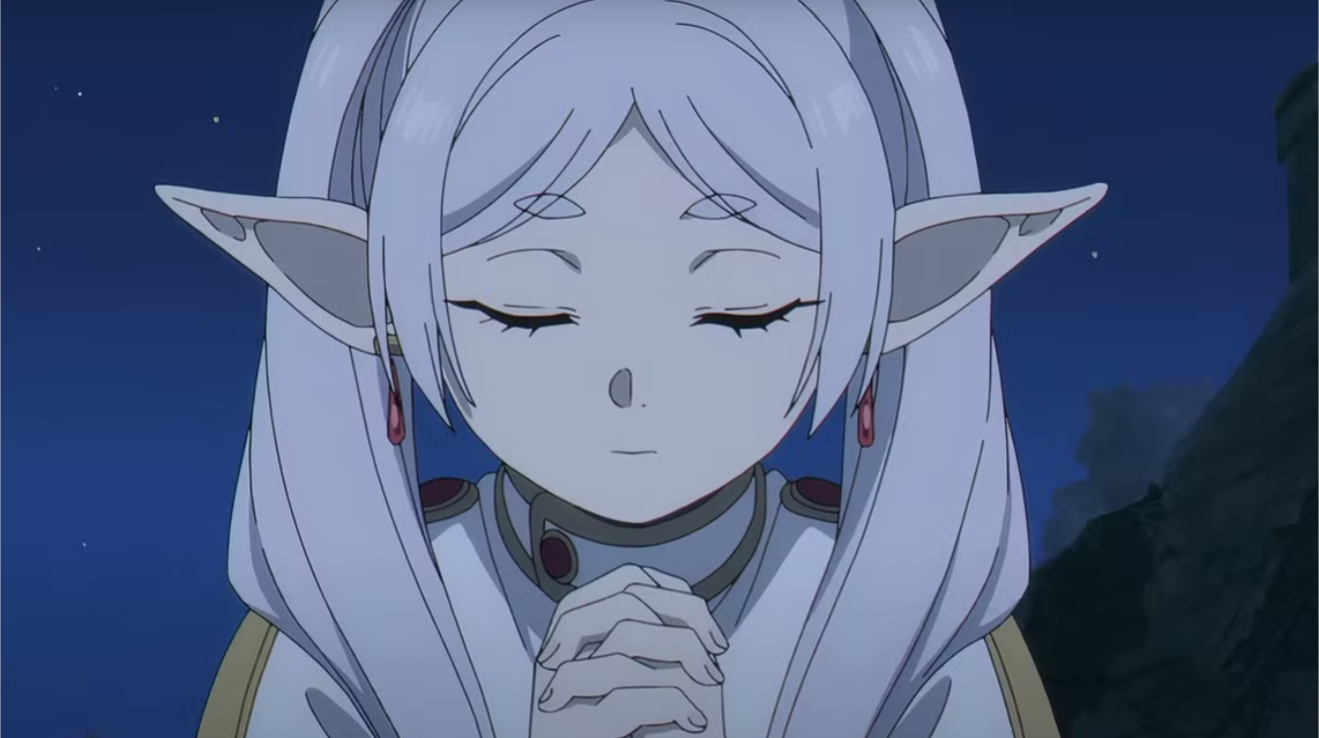
Start with Frieren. The second season premiered in January and ran through March, and it kept doing the thing that made the first run so quietly devastating. Here’s an elf mage who will outlive almost everybody around her. Her old party saved the world together, but her human companions grow old and die while she barely changes. That’s the whole engine of it. Our girl spends her long life realizing, too late, that she never really knew the humans she traveled with. Himmel the hero is gone before she thinks to ask him a single real question. And the grief in it never announces itself with big orchestral swells. It creeps in. A small memory, a flower she recognizes, some habit she picked up from a dead friend without ever noticing she picked it up.
I lost my grandfather a while back, and this series understands something about that kind of loss most media fumbles. You don’t grieve all at once. It comes in ambushes. Somebody laughs a certain way in a grocery store aisle and suddenly you’re gone for a minute, standing there holding a can of beans. Frieren gets that. For a fantasy cartoon about wizards, it has more honest things to say about mortality than most dramas built by adults for adults. Mallorie Rodak and the dub crew earned their flowers too, because none of it works without that restraint in the delivery. Say it too loud and the whole thing collapses.
Then there’s Akane-banashi, which snuck up on the whole culture this spring. It’s a Shonen Jump title, but the subject is rakugo. You know, that traditional Japanese art where somebody sits on a cushion and acts out a full story using only their voice, a folding fan and a small hand towel. Doesn’t sound like something that would survive the jump to animation, right? But the way ZEXCS staged it, the audience literally starts seeing the world the performer is describing, and the screen bends around the storyteller once the performance gets cooking.
The heart of it is Akane, a high schooler whose father was expelled from the Arakawa school during a promotion test for shin’uchi, rakugo’s highest rank. As a little girl she watched the whole thing come apart. Over the next six years, she quietly trained under his former master. By high school, she is ready to chase that rank herself, partly out of love and partly out of a slow-burning need to set it right. That’s where the personal responsibility runs deep. Power isn’t the prize here. What she wants is command of something ancient and unforgiving, and she has to figure out whether she’s doing it for her pops or for herself. Any Blerd who ever fell for a discipline nobody around them respected knows that feeling in his chest. Everybody who picked up an instrument, a pen, a controller, a mic, and got told it was a waste of time.
The artistry is what stuck with me longest. This is a show about how hard it is to be good at a thing. Not gifted. Good. It respects the grind, the failure, the nights you bomb in front of a half-empty room and drive home replaying every flat line in the dark. And it never pretends talent settles the matter. Akane may have inherited some of her father’s ability, but she still has to eat dirt to earn a spot at the table.
Now if you want something that scratches the political itch, Nippon Sangoku is the one nobody saw coming. It landed worldwide on Prime Video in April and turned a lot of heads, Hideo Kojima’s included, which tells you something about the quality. The premise is bleak. Near-future Japan buckles under the effects of nuclear war, a deadly virus, a devastating earthquake and a government too crooked and greedy to protect its people. Heavy taxes and famine squeeze the population until the people finally rise up. A hundred years later, the country is split into three warring states, and a young man named Aoteru Misumi is trying to stitch it back together using his mind and his command of language instead of brute force.
Watch that setup and tell me it doesn’t rhyme with the news. Leadership acting on its worst impulses because nobody can check it. Regular folks treated as disposable over who they are and where they come from. What the series does with the setting is wild. It takes the skeleton of the Chinese Three Kingdoms saga and drops it into a Japan where technology and society have fallen back to something resembling the Meiji era. Sepia washes over everything, with dust in the corners of every frame like an old period drama. Beautiful to look at. Also cruel, and in no hurry to let you off the hook. Aoteru climbs on knowledge and persuasion, which is its own argument about where real strength actually lives. Not always in the blade.
What ties these three together is that they trust you to be an adult in the room. Frieren asks you to sit in loss without a tidy bow slapped on top. With Akane-banashi the question becomes whether inheritance is a gift or a debt you signed for without reading. And Nippon Sangoku wants to know what you owe a broken society, whether one clear-eyed person can shift it at all.
That’s the stuff I need at this age. I came up on Toonami like a lot of us, mainlining action after school, and I’ll never quit that part of me. There’s still a place for a good scrap. But the older I get, the more I want a story that respects my hours and my losses. One that knows I’ve buried people. One that knows I’ve got responsibilities I never asked for and had to grow into anyway, ready or not.
Death, crooked politics, the loneliness of chasing something beautiful, the weight of family sitting on your shoulders. Turns out the form had room for all of it the whole time. We just had to age up enough to notice it was there.
So if you’re a grown Blerd staring at a bloated watchlist wondering why nothing’s landing, skip the flavor of the month. Sit with one of these instead. Give it space to get quiet on you. That’s exactly where all three do their real work.
Staff Writer; Greg Tucker
GT is an old-school blerd who loves anime, comics, manga, video games, and collecting indie Black comic books.
Contact him at: GregT@AfroGamers.com.