
(AfroGamers.com) Every perpetual manga reader or anime watcher has encountered the infamous long-titled series. These mangas and animes have titles that are not only long but practically summarise the entire premise of the story. We find this a lot with those in the isekai and fantasy genres where the main character, the main character’s goals and their conflict are plainly given to the readers. Even so, there are mangas that do in fact make up for the often-obnoxious details by having a captivating storyline, intriguing characters and details that go beyond what was already given to us in the title. This post looks at one such manga. Not only does it have a long title but it slips out the barrel of ‘slop manga’ by being an immersive experience for the average manga reader who enjoys thought-provoking, yet entertaining, tales.
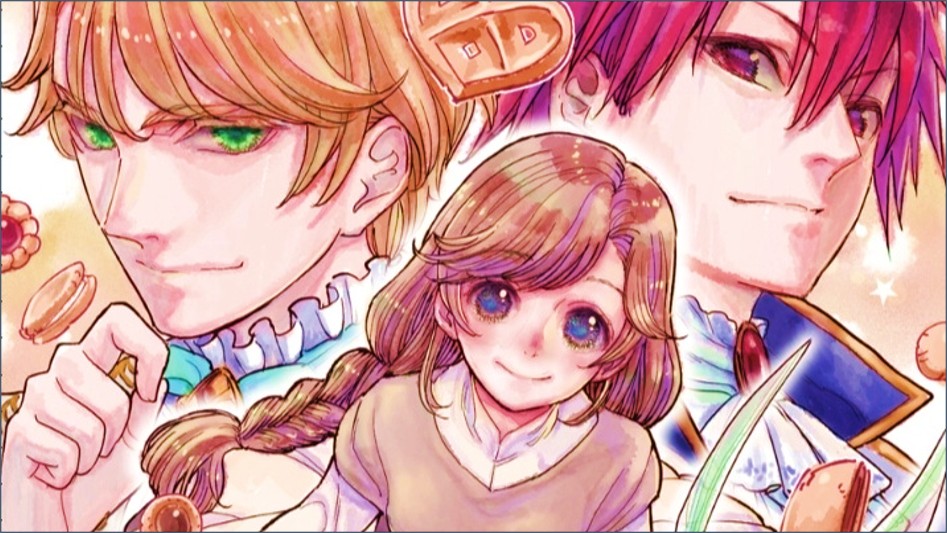
When I Became a Commoner They Broke off Our Engagement by Kenzi Oiwa
This manga is based on a light novel series of the same name, released in 2023. The premise of the series is as the title suggests – a noble lady being demoted to a commoner thus having her engagement broken off – but it is not the main impression of the story.
Simply put, the manga follows a young girl named Anna who ends up being kicked out by her noble family after it was discovered that she was switched at birth with their real daughter. Forced to forgo a sheltered, wealthy life, and even having her engagement with a young nobleman broken off, she quickly learns to adapt to the commoner lifestyle. In contrast, the real daughter, Annette, slowly learns to assimilate into the life of a noble lady whilst being made aware of and imposed into the complex, hierarchal systems of the nobility.
The manga mainly focusses on Anna’s perspective but it does an interesting job at providing the viewpoints of all the other characters – primarily of Annette, Henry (Annette’s older brother) and Edmund (Anna’s ex-fiancé). As we read and look at Anna’s journey navigating a new lifestyle there are instances that speak well to hers and the ignorance of some people to the lives of others. Although Anna is not an inherently bad person, we see how blindsided she is by the state of living and circumstances of people of the lower class. We can argue that she is only a 13-year-old girl so making her feel responsible for her lack of awareness is incredibly unfair, which is a great point to make. Except, Anna at first resolved to view commoners and their lifestyle as theatrical or otherworldly. For instance, she goes as far as calling commoners “superhuman” for not bathing every day, only eating twice a day and dressing in the same set of clothes for long periods of time.
However, after she began living with her otherwise destitute biological family, she began to learn how to overcome her new struggle by learning everything she possibly could to improve their way of life. She learns how to cook, to clean, to navigate the bustling marketplace and, finally, how to earn money and make a proper living. All of which she does by observing those around her like her biological mother and brothers.
On the other hand, there is Annette who also does her best to try adapting to nobility. The interesting thing about her scenario is that she less learns to adapt so she can become familiar with her new environment but does so because she is trying to be accepted by her new family. She validates her fragile heart by conforming to the strict lessons imposed by the nobility. And even though she does not like some of the ideals, like being married off at an age as young as 13, she swallows her frustration and hopes everything she learns from the nobles will help better the lifestyles of the commoner friends and family she was forced to snub – because commoners and nobles cannot mingle with each other.
It is Still a Typical Fantasy Manga
The exploration of identity and class differences is more than well written in When I Become a Commoner… but in typical fantasy manga fashion, it includes magic and a power system. To begin with, Anna and Annette were switched at birth not by human influence but by a trickster fairy who believed it would be fun to watch the two families quarrel in the future after discovering it had switched them.
Other than the fairies, there is how much magic and magical abilities are heavily held in high regard, especially by the high-ranking nobles. It follows the classic, ‘nobles should be born more powerful than the commoners’ trope. Another trope has to do with Anna herself. In a lot of isekai and fantasy manga, the main character is written to be OP (over-powered), acquiring and levelling-up their skills and abilities so that they have it easier in life and in any potential fights/battles. Anna learns from Klew (another fairy who is also friends with the mischievous, baby swapping fairy) how to use various magic types and skills so she can have it a little easier when living as a commoner. Just like learning ‘cleaning magic’ so she didn’t have to worry about not being able to bath every day.
The magic and magic system are not an integral part of the story but they do pop up to showcase how Anna is living just a little comfortably, and to showcase how much magic (specifically healing magic) is one of the highly regarded reasons Anna and Annette both try to find their purpose in their respective social spaces.
It is Not the Only Masterpiece
When I Became a Commoner… is one of those manga which are buried in an abyss of countless manga with the same or similar plot. It is a rare find that really captivates you and makes you wonder ‘why haven’t I read this before?’ Moreover, it reads quite well as a light-hearted think-piece on the deep-rooted circumstances of young girls in a world where their identities are measured by how much they are worth to their families, future husbands and social spaces. The ‘poor vs. rich’ viewpoints gives you as the reader a chance to both relate to the characters and to sympathise with those in positions you may not otherwise understand.
There are other masterpieces out there with long titles but still manage to draw you in. One of the most popular ones out there is That Time I Got Reincarnated into a Slime. The story was so good as a light novel that it received an anime adaptation before being adapted into a manga – which they later did following the anime’s popularity. Even though the story is quote-unquote ‘very isekai-ish’, it explores political, economic, societal, and discriminatory ideologies that communicate comprehensively to viewers of the anime.
In short, there is a high number of manga out there with ridiculously long titles. Although a lot are sloppy and overrated at best, some authors of the works actually put in the work to create fascinating stories. Some may say with all these light novel and manga authors heavily competing for audience attention, they make it easier for readers by displaying their works’ premise in the title (hence why they are long). In spite of that, we still manage to find them and enjoy rare works of art.
Staff Writer; Fadzai Nyamande
A South African who brings her love for fiction, manga, and storytelling into every piece she creates. Her writing is shaped by imagination, curiosity, and a true appreciation for the worlds stories can build.
Feel free to drop a note at; FadzaiN@AfroGamers.com.