
(AfroGamers.com) For plenty of us, the introduction happened on a couch. Cartoon Network, weekend morning, cereal going soggy while a show opened cold. No longbox required. A comic shop pilgrimage and a wiki deep dive weren’t part of it either, since we understood the picture in front of us on sight. The emerald figure flew across a screen carrying the face of somebody from the neighborhood, and that was that.
His name was John Stewart. For my generation, he wasn’t a substitute or a watered-down copy of anybody. He was the whole thing.
Let me rewind for the newer heads in the room. On the printed page, test pilot Hal Jordan became the Green Lantern of the Silver Age back in 1959. Fine. Solid enough. Stewart showed up in 1971, dreamed up by Denny O’Neil and Neal Adams, standing as one of the earliest Black heroes DC ever printed. An architect with an attitude and zero interest in bootlicking. When he first slipped into that uniform, he tossed the mask aside and basically told the world he had nothing to hide. That energy stuck to the character for good.
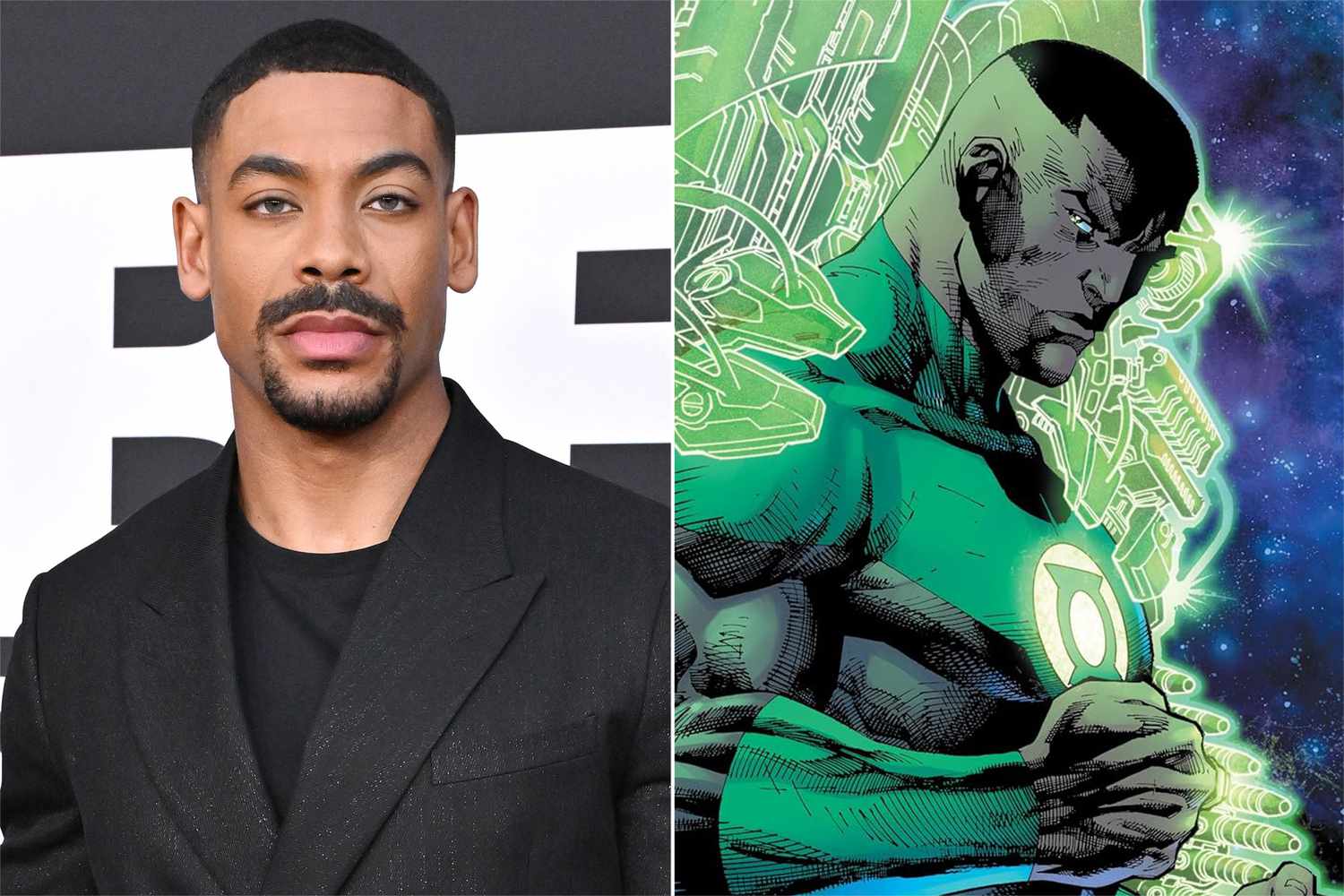
Comic readers knew the man for decades. Television? A different story entirely, and that’s exactly where things shifted for kids like me.
November 2001. Justice League premieres. Check the founding roster: Superman, Batman, Wonder Woman, the Flash streaking past, Martian Manhunter, Hawkgirl, plus the ring-bearer we showed up here to talk about. Phil LaMarr handled the voice. Deep, a little smoke curling through it, and it landed low in your chest a beat before any of the words even registered. Controlled. Military. A brother who never had to raise his tone because the weight was already there.
That cartoon refused to treat him like a benchwarmer. He pulled real arcs. Got handed a spine, flaws, opinions that clashed with the folks around him. Take “In Blackest Night,” where the Manhunters haul him across the galaxy accused of blowing up an entire planet. Instead of running, he surrenders to face trial. Willingly. Because being held accountable actually meant something to the man, even when it could cost him everything. Try finding that kind of moral weight in most weekend animation from that era.
Then there’s “The Savage Time.” Our guy gets stranded in a busted World War II timeline, loses access to the ring, and refuses to fold. He grabs a rifle, links up with Easy Company, and scraps as a plain foot soldier. That stretch told you everything you needed. The jewelry made him a hero on paper. It was not the thing that made him brave. LaMarr caught all of it, the hardness, the restraint, the quiet of somebody already sitting on too much and living to carry it.
By the time Justice League Unlimited rolled around, he’d gone bald, gotten sharper, and locked himself into the culture. For a stretch of us growing up in the 2000s, you said those two magic words and this was the face that appeared behind your eyes. Not the pilot. Him.
Here’s what folks who never needed it might breeze right past. Watching a Black man lead a squad standing shoulder to shoulder with Superman, calling the plays, thinking three moves ahead of everybody, being the disciplined presence that kept its cool when the room caught fire? That did something to a young mind. We didn’t have a buffet of options back then. This brother was it. And nobody wrote him as a mascot or a sidekick with a catchphrase. He argued. Butted heads with teammates if the moment called for it. Carried himself as a grown adult with grown responsibilities, and he looked like our uncles and our cousins while doing it. Blerds of a certain vintage still light up at the sight of that steady presence and that unmistakable baritone.
I’ve sat through the debates plenty of times. Hal loyalists will swear up and down that Jordan is THE definitive pick, the space cop’s space cop, the original pick of the litter. Cool. No disrespect to the OG whatsoever. Definitions get built in living rooms, though, and mine got built watching LaMarr command a room stuffed with legends. You don’t talk somebody out of a first love. It doesn’t work that way.
Chew on the bigger picture for a second. In 2001, a Black lead anchoring a marquee superhero team wasn’t exactly a common sight on Saturday programming. Static Shock was doing its thing around that same period, sure, and that mattered too. Beyond a small handful of examples, though, the pickings stayed slim. So when this particular hero showed up steady, competent, and unbothered, a lot of us latched on and never let go. Representation talk gets tossed around loosely these days, but the real version feels like recognition. Feels closer to somebody finally leaving the door cracked.
Which carries us, at long last, straight to right now. HBO dropped Lanterns on August 16th, and for a bunch of us that premiere landed heavier than the average superhero rollout. You catch it over on HBO Max, with fresh episodes hitting the platform every Sunday night rather than all at once, eight of them across the season. Aaron Pierre steps into the role, sharing the frame with Kyle Chandler as a grizzled, road-worn Hal Jordan. Best part? The whole creative approach tosses the usual cape-and-cosmic-battle formula straight in the trash.
Chris Mundy ran point here. Same dude who ran Ozark and executive produced that icy True Detective: Night Country stretch. He set it up as a grounded murder mystery, dropped way out in the American heartland. Dusty backroads. A body left where nobody happens to be looking. Two space cops grinding through a case, and the vibe leans grim. Slow-burn noir. Popcorn spectacle this ain’t. Damon Lindelof and Tom King had their hands in it too, and Lindelof’s already copped to that old cartoon rattling around his head while he shaped his piece. Of course he did. That version is the water plenty of us learned to swim in.
Watching Pierre gear up carries more freight than a casual viewer might clock. This marks the first time our guy gets handed a major live-action leading role. Not a cameo. Forget a blink-and-miss background nod for the diehards to screenshot. A genuine lead. His mother Bernadette turns up through Nicole Ari Parker. Sinestro lurks somewhere in the shadows. Guy Gardner pops in courtesy of Nathan Fillion. A real cosmos is getting stacked brick by brick, and this hero sits close to the middle of the whole build.
Will Lanterns actually stick the landing? Way too early to crown anybody. Comic adaptations fumble the bag constantly, and a moody detective spin on space cops carries its own stack of risks. Still, the plain fact that a kid who grew up jabbing a finger at the television can now watch that same hero anchor a prestige drama on a Sunday night? Not small at all. That’s decades of a once semi-obscure figure finally collecting his flowers on the biggest stage the medium offers.
For me, and for a whole generation that met him before any other version, the animated one already settled this argument ages ago. Live-action is just the wider world catching up to what we understood as children. He was never the backup plan or the asterisk. Lanterns is simply the newest chapter proving what we called years back. He was the one all along.
Staff Writer; Greg Tucker
GT is an old-school blerd who loves anime, comics, manga, video games, and collecting indie Black comic books.
Contact him at: GregT@AfroGamers.com.