
(AfroGamers.com) Most shonen come down to whatever logic is running the fights. That part matters more than a fat animation budget or a slick character design, since it quietly decides who has any business winning. Botch it and your big climactic showdown becomes two dudes screaming, each one praying he can outshout the other. Anime kept the answer pretty basic for a long stretch. A kid would train until his knuckles bled, smack face first into a wall he could not punch through, then dig out some buried gear inside himself right when the people he loved needed saving. Yoshihiro Togashi showed up with Hunter x Hunter and quietly blew that whole formula apart.
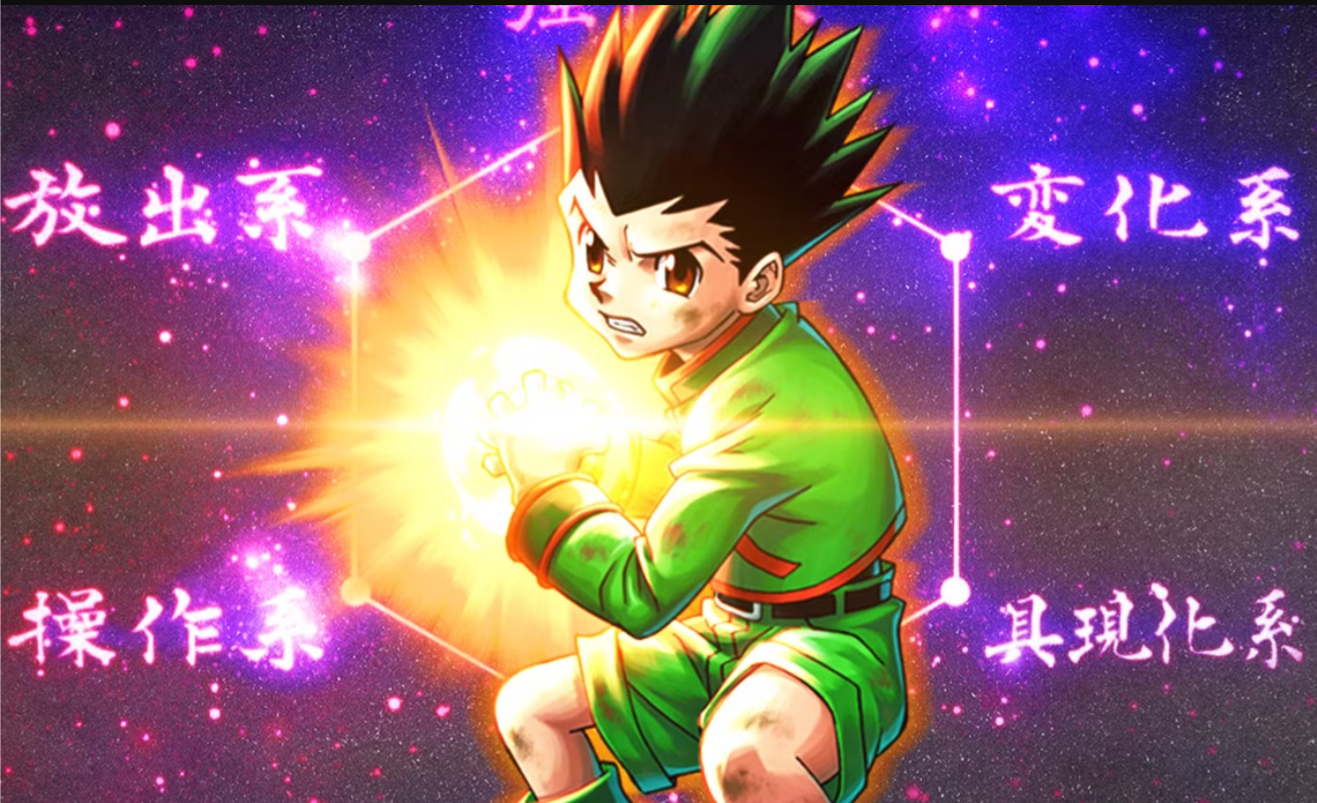
Nen worked because it respected our intelligence without drowning us in it. The aura Gon and Killua learned to shape followed a tight set of principles, and those held firm no matter how desperate the plot got. A user discovered an innate category that often seemed to fit their temperament, then paid for real strength by shaping abilities around conditions and restrictions that could carry brutal consequences. Kurapika’s Chain Jail could only be used against the Phantom Troupe, and that single limitation made it terrifyingly effective against the very crew he hunted. You felt the weight of every choice he committed to.
That is the part newer creators keep fumbling. Restriction was the whole point. He built a world where a smaller fighter could still drop a giant, not through raw muscle but by planning ahead and finding the nerve to bet his life on a condition he set himself. The difficulty there always had a direction to it. It read as intention rather than busywork. Some weird little rule dropped early tended to matter again by the time a later brawl rolled around, so leaning in and tracking the details actually handed you a payoff.
A whole lot of modern anime lost that thread completely. Jujutsu Kaisen inherited plenty from the master, and Gege Akutami clearly adores a tangled mechanic. Cursed energy starts clean enough. Humans leak negativity, sorcerers weaponize it, curses feed on it. Fine. Somewhere around the Gojo lore, though, the show swaps clarity for a lecture. Infinity borrows a Greek paradox to justify why nobody can lay a finger on the man. Blue yanks stuff toward him, Red shoves it away, and Purple tears through whatever gets caught in the collision of those forces. By the time some narrator wraps up another fat paragraph of theory mid brawl, you have already paused the episode to squint at a diagram, and the punch you were supposed to feel got lost way back there.
Let me be fair for a second. Thick lore is not a crime, and when it genuinely feeds the story it can be gorgeous. Trouble shows up the moment a writer mistakes elaborate paperwork for genuine depth. One fighter burns receipts and contracts to reproduce whatever goods or services they represent, yet the manga leaves enough edge cases around those contracts to make the boundaries feel slippery. Another dude warps reality whenever he is genuinely convinced something would be funny, with the limits tied more to his confidence and comic instincts than to any clearly measurable resource. Guidelines that vague stop guiding anybody. They basically become vibes with a few extra steps.
And there sits the trap. A magic framework does not gain weight by piling on clauses. It gains weight when those clauses build tension you can actually track through a scene. Bleach stumbled into similar quicksand years back, stacking reiryoku, reiatsu, reishi, and layers of spiritual mechanics until even loyal readers sometimes needed a refresher just to follow one duel. Plenty of recent anime keep chasing that maximalist high, confusing a thick manual for a clever build.
One Piece sits in a fascinating middle ground worth mentioning here. Its Devil Fruits hand out powers that make almost zero logical sense, from a rubber body to a dude who literally turns into a jacket. Oda never pretends the mechanics are airtight. He sacrifices tidy consistency for pure imagination and emotional punch, and the trade mostly works because the series knows exactly what it values. That honesty matters. A show gets into trouble when it wants the creative chaos of Devil Fruits while also demanding the rigorous respect a system like Nen commands, then delivers neither cleanly.
World Trigger quietly proves the disciplined approach still wins. Its Trion mechanic stays legible from the jump. Bigger reserves let an agent last longer or strike harder, though positioning, teamwork, and sharp gear selection decide most matches anyway. Viewers always grasp why somebody came out on top, and the answer refuses to feel obvious beforehand. That equilibrium is the entire ballgame. It stays clear enough to follow while hiding plenty underneath to still catch you off guard.
What happened across the last decade feels pretty clear to me. Nen set a bar so high that a whole generation of creators studied the wrong lesson entirely. They saw the intricacy and copied the surface, missing the discipline running quietly underneath. Togashi had a habit of making earlier principles matter again later, which meant the audience could theorycraft alongside the cast and occasionally call a counter before it even landed. That handshake between story and viewer is the real payoff, not the raw pile of terminology.
We as fans have to hold this line too. Somewhere down the road, difficulty got confused with quality, like any clash nobody understands must secretly be brilliant. Nah, family. Bewilderment is not sophistication. A technique needing a twenty minute video breakdown to justify its own existence probably flopped at the drawing board. The strongest frameworks whisper their logic through the action itself, letting a slick setup speak way louder than any narrator possibly could.
Part of me gets why this keeps happening. Anime moves in trends, and once Jujutsu Kaisen blew up with its dense cursed energy web, studios and mangaka smelled a formula. Complexity became a signal, a way to shout that a title deserves the smart kid table. The audience fed it too, treating every convoluted power scaling debate as proof of a masterpiece. Somewhere in that loop, the actual craft got lost. Nobody stopped to ask whether the tangle made the fights better or merely made them longer to explain.
I still adore a dense, brainy series with everything in me. My shelf is loud proof of that appetite. What I crave is for the thickness to mean something real, to reward the rewatch instead of gatekeeping the very first pass. Hand me limitations with actual teeth. Let me feel a cost land in my chest the moment a character finally pays it. Build me a showdown where the smaller fighter outthinks the beast because the logic permits it, not because the author suddenly remembered a clause from three arcs back.
The original earned its reputation by treating complication as a promise rather than a flex. Newer titles chasing that same throne should sit with the difference for a real minute. Substance is not how many clauses you can stack on a page. It is how much those choices make us lean forward, breath held, genuinely invested in what the tension truly costs a character. Stack fewer, mean more, and the battles will hit way harder than any wall of text ever managed to.
Staff Writer; Carl Davis
This bro has always been into gaming, anime, manga, old-school sitcoms, and just about anything connected to nerd culture. A proud Black blerd for life, CD enjoys writing about the shows, games, and characters that have stayed with him over the years.
Feel free to drop him a message at CarlD@AfroGamers.com.