
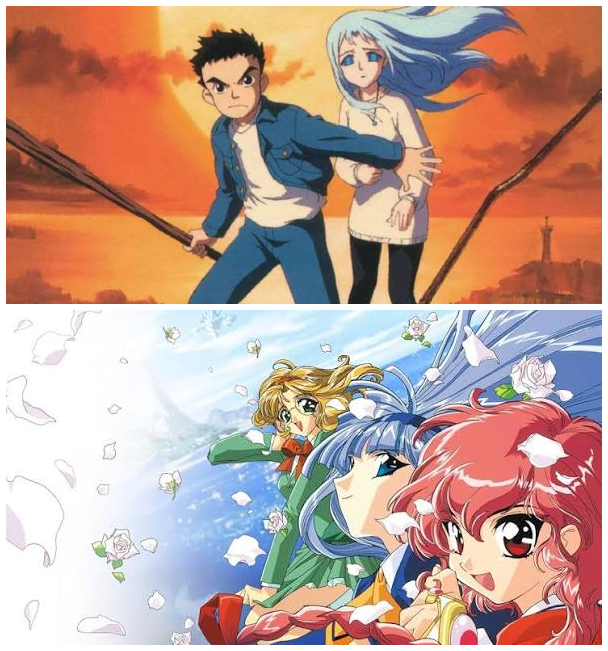
(AfroGamers.com) Somewhere in the middle of Magic Knight Rayearth, it clicks that those three girls are not on vacation. Hikaru, Umi, and Fuu get yanked away while visiting Tokyo Tower on school field trips and dropped into Cephiro with a job nobody asked them to sign up for. Under all the sword fights and giant mecha, one wish keeps humming. They just want their regular lives.
That hum is the thing I miss.
A big branch of modern portal fantasy has mostly let it go. The formula often runs like this. Some guy dies, usually from a truck or overwork, wakes up in a fantasy realm with a cheat skill, and inside three episodes he’s running a tavern, collecting admirers, treating the entire mess like a soft landing. Nobody’s crying over a mother they’ll never see. No one’s staring at a strange sky wondering if anyone on the other side even noticed they vanished. The move now is often to settle in and thrive.
I get why it sells. Who wouldn’t want a do over with god mode flipped on? Still, the older stuff hit harder because leaving wasn’t the fantasy. Getting back was.
Think about Hitomi in Escaflowne. She runs track, reads tarot, nurses a crush, lives an ordinary teenage life. Then the impossible crashes straight into that ordinary world, a young swordsman battles a dragon practically in front of her, and before she can process any of it she’s standing on Gaea. The series never lets that sense of displacement fade. Every quiet scene carries the ache of a girl separated from her own bed, old friends, and the small familiar problems she used to shrug off. Gaea is gorgeous and doomed and soaked in war, and she’s stuck inside it holding visions nobody asked for. The spectacle lands because plenty of the time she’d gladly trade all that grandeur for something as ordinary as standing at a starting line again.
Or take Now and Then, Here and There, the title I pull out when somebody swears cartoons can’t wreck you. Shu is a cheerful kid who jumps into danger trying to protect a stranger, then gets dragged somewhere scorched and merciless. No power boost arrives. Zero fan club waiting. Just child soldiers, drought, and a warlord running on cruelty alone. Our hero spends the full run gripping plain decency like the last familiar thing left, and the drive to escape is less about comfort than about staying himself. That whole tension only works because the place that swallowed him is actively trying to break him.
See the pattern? Over there had teeth.
That’s the piece a lot of today’s wave trades away. When the strange realm is a theme park built around one guy, nothing really presses on him. Danger gets defanged. Isolation evaporates. The stakes shrink down to whether he can out level the next opponent. Set that beside Chihiro in Spirited Away, who spends the first night trembling and half invisible, watching both parents turn into pigs, learning that forgetting her own name could leave her trapped forever. Miyazaki understood the assignment. That bathhouse glitters, but it’s a snare too, and the only fuel keeping Chihiro upright is the memory of a life worth getting out for.
Even the goofier entries from that stretch kept a pinch of this. Fushigi Yuugi drops Miaka inside an ancient book, and yeah, it swerves into full romance soap, yet she stays scared half the time, still hungry, still aware that her ordinary life and looming entrance exams sit on the far side of the page. El Hazard sends a whole cast into a stunning elsewhere and lets them enjoy the ride, though the possibility of getting home never disappears completely. The ordinary keeps tugging.
Then you’ve got The Twelve Kingdoms, maybe the cleanest version of the idea. Youko gets pulled across with pretty promises and a blade, and almost at once everything curdles. People lie to her. Monsters stalk the roads. Starving, broke, and betrayed early in the journey, Youko may have a special destiny waiting for her, but surviving long enough to understand and claim it is anything but free. Earning a foothold means grieving the dull safe routine she used to resent. By the time she quits begging to leave, it’s because she grew into that place the hard way, not because anybody handed over a mansion.
That growth is the whole point. Longing for familiar ground wasn’t decoration. It was the engine. A character who wants out has to change enough to either find a door or decide, through blood and loss, that remaining means something now. The reluctance made the eventual choice to stay actually cost something.
Flip to plenty of modern isekai. The protagonist shows up ready to embrace the new world almost immediately. Where’s the friction in that? If paradise lands in your lap on day one, there’s no arc, just a slow drip of fresh perks. I won’t pretend each current title is hollow. Re:Zero drags Subaru through real hell, and part of why it cuts so deep is that he’s stripped of any clean exit and forced to relive brutal stretches of time through Return by Death, dying again and again while trying to change the outcome. Mushoku Tensei at least sits with the weight of a squandered first go round. So the old instinct isn’t buried. It simply turned rare.
A chunk of this comes down to the wish each era sells. Those classic stories often spoke to kids who felt small and overlooked, and the promise was that your dull everyday mattered, that people would miss you, that clawing your way back was worth the fight. A lot of the modern crop sells the reverse. Your real existence was the cage, and the trapdoor out is the prize. One version says you belong somewhere. The other says you should vanish and restart. I know which message I’d rather hand a twelve year old.
There’s also richer drama in craving something you can’t easily grab. Tension needs a gap. Drop a teen into a brutal elsewhere and make them desperate to cross back over, and every episode carries a pulse. Give that same teen a palace and groupies, and you’re mostly watching a dude have a nice time.
I’m not here to gatekeep anybody’s cozy watch. Sometimes a low stakes story about running a potion shop is exactly the mood. But when people ask why the classics lodge in your memory, this sits near the center of it. Those kids were lost. Genuinely lost. And watching them scratch toward something familiar, or make peace with losing it for good, meant the trip carried real weight.
Give me a lead who stares at that beautiful ruined sky and still whispers that they want to go home. That’s where the good stuff lives.
Staff Writer; Greg Tucker
GT is an old-school blerd who loves anime, comics, manga, video games, and collecting indie Black comic books.
Contact him at: GregT@AfroGamers.com.