
(AfroGamers.com) Look closely at the fall 2026 anime calendar and a curious pattern stands out. Some of the most anticipated releases arriving this October are not fresh creations at all. They come from shelves that sat untouched for decades, revived long after most of the industry had written them off. PSYREN, the psychic thriller that ran in Jump and never received an anime during its original run, arrives beside From Far Away, a fantasy that never once reached a screen, and Magic Knight Rayearth, which had its moment in the 90s and now lines up for another look. Their arrival in the same window feels like more than coincidence. Studios are placing a calculated bet, and it deserves a closer read.
Follow each one back to its origin and the play makes sense.
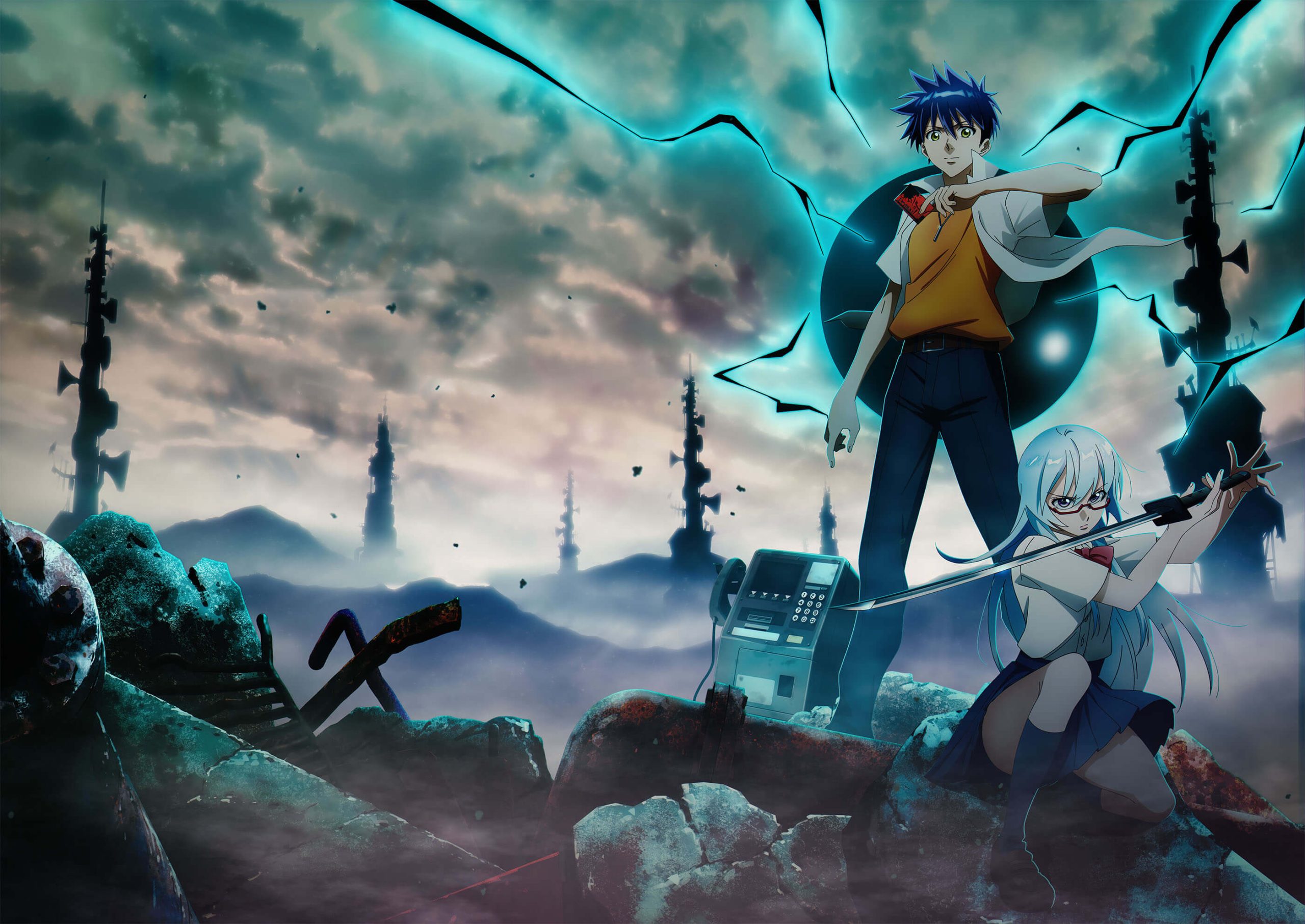
Start with PSYREN, which still stings anyone who read Shonen Jump in the late 2000s. Toshiaki Iwashiro built a devoted following around time travel, a bombed out future, psychic battles, and characters readers stayed attached to long after the serialization ended. The manga wrapped in 2010 after 16 volumes, yet an anime never followed. For roughly 15 years, fans kept asking for one. Satelight holds the project now, Katsumi Ono directs, and Iwashiro has spoken about younger editors and anime staff telling him they had loved PSYREN as teenagers before eventually rising into positions where they could help make the adaptation happen. He also expressed happiness that he could finally tell his parents and family that PSYREN was becoming an anime, an announcement he had never been able to make during the manga’s original run. Long dormant affection eventually built itself a payroll. Fan pressure mattered too. PSYREN was nominated multiple times in AnimeJapan’s Manga We Want to See Animated voting project before finally getting its shot.
One of the more interesting pieces of the revival is how much of the original atmosphere still appears intact. Official material continues to lean heavily on the public telephone and red telephone card imagery that helped give PSYREN its strange identity in the first place. Those objects already felt slightly mysterious when the manga began. In 2026, with younger viewers who may barely remember public phone booths at all, they carry an even stronger urban legend quality. Sometimes age does not weaken a premise. It accidentally makes it stranger.
From Far Away represents a different kind of oversight. Kyoko Hikawa was writing this kind of otherworld fantasy decades before the modern isekai boom turned the concept into one of anime’s busiest lanes. Noriko, her lead, falls into a sword and sorcery world and takes up with Izark, a wandering swordsman hiding a darkness that could end everything. What makes it work is not simply the plot. It is what happens in the gaps. The two of them cannot speak the same language at first, so much of their relationship runs on glances, missed cues, mistranslations, and slowly earned trust. It serialized in LaLa from 1991 to 2002, reached 14 volumes, and somehow never touched a screen. Studio DEEN finally grabbed it for the manga’s 35th anniversary, with Hikawa supervising the adaptation and participating in the script process. Material this delicate can fall apart in careless hands, so her involvement is the reassuring part. The irony is hard to miss. That blueprint sat there untouched while the genre ballooned into a seasonal machine, and almost nobody reached back for the source.
Magic Knight Rayearth stands as the veteran of the group. CLAMP introduced Hikaru, Umi, and Fuu, swept from Tokyo Tower into Cephiro, in the mid 90s, and the first television version already earned a 49 episode run followed later by a three part OVA. So why revisit it? Because the property is proven, the affection endures, and CLAMP loyalists have wanted that door reopened for a generation. Casting Ayane Sakura, Rumi Okubo, and Rie Takahashi as the trio, with E&H production handling the animation, signals that the revival is being treated as a high profile project rather than a quiet nostalgia exercise.
The common thread across all three runs deeper than coincidence.
Some studios appear increasingly interested in a different kind of gamble. For years the seasonal pipeline has leaned heavily on light novels, web novels, manga still deep in serialization, and other properties whose endings remain years away. The pattern is familiar. A production house options a popular work, animates 12 episodes, stops on a cliffhanger because the source continues well beyond the adaptation, and the whole effort may fade once the next seasonal favorite appears. Plenty of those shows succeed, and some become enormous franchises, but viewers have also become familiar with adaptations that feel less like complete stories and more like extended advertisements for unfinished source material.
A completed run removes problems money alone cannot solve. The ending already exists. The pacing has been tested across years of publication. The devoted audience knows every beat and can show up on day one ready to talk about what changed, what stayed, and whether the adaptation understood the thing they loved in the first place. PSYREN is almost a perfect example. Readers spent years asking why it had never been animated. That audience does not have to be invented from scratch. The name already means something to them. Streaming platforms and production committees understand the value of recognition, and an established property arrives with history already attached.
The scheduling logic is easy to understand. Anime no longer needs every flagship title to come directly from whatever manga is hottest that month. A back catalog property with a strong reputation can occupy the same conversation while carrying a different kind of risk. Nobody has to guess whether the source eventually falls apart because the whole story is sitting there. Nobody has to wonder whether the author can finish it. The question becomes simpler. Can a modern production team make old material feel alive again?
Which raises the question this entire moment invites. What if the next major surge does not originate in a light novel? What if it emerges from the discount bin instead?
Consider how many finished classics sit quietly in the archives. Beloved series were passed over because the timing was wrong, the genre had fallen out of fashion, another title was selling better, or the industry simply never got around to them. Others received adaptations so long ago that an entire generation of anime viewers has never encountered them outside clips, old DVDs, scans, and recommendations from older fans. Each one is a complete narrative with a built in audience waiting to see whether somebody finally treats it right. A production house that learns to work that neglected shelf is not simply chasing hype. It is working with material whose strengths and weaknesses are already known.
None of this guarantees success. A cherished favorite can still be mishandled by a rushed schedule or a team that fails to respect what made the source special. Faithful is not the same as lazy. A scene that worked on the printed page still has to work in motion. Dialogue still needs rhythm. Action still needs weight. Character chemistry still has to survive the jump from panels to voices and movement. Still, a finished story hands the crew the full shape of the material before a single frame is drawn, an advantage no half completed serial can offer.
None of this argues against fresh voices. New talent keeps the medium alive, and some of the finest anime in any era has arrived from creators audiences barely knew beforehand. Yet the herd instinct in this business is powerful, and if several of these revivals perform well, expect more producers to start studying shelves they once ignored. The next gold rush may not push toward the future at all. It may reach backward, into the very titles audiences once loved and everyone else forgot.
Watch this trio closely in October. If they connect with audiences, the shelf nobody was studying could suddenly become some of the most valuable ground in the medium.
Staff Writer; Carl Davis
This bro has always been into gaming, anime, manga, old-school sitcoms, and just about anything connected to nerd culture. A proud Black blerd for life, CD enjoys writing about the shows, games, and characters that have stayed with him over the years.
Feel free to drop him a message at CarlD@AfroGamers.com.