
(AfroGamers.com) The global appetite for Japanese animation has never looked more voracious, yet the creative daring behind it keeps thinning in ways worth sitting with.
Let me put it plain. We won. The culture won. Two decades back, telling somebody at the family cookout that you skipped the game to catch subbed episodes got you a certain look. The same face your uncle threw when he caught you drawing spiky hair in your notebook margins. Now your barber quotes Gojo mid fade. Your coworker who swore up and down she only messed with prestige HBO dramas is walking around with a Frieren pin clipped to her tote. Netflix says more than a hundred and fifty million members around the world choose to watch anime. That figure would have read like a fever dream back when we were burning discs and praying the fansub crew didn’t ghost us halfway through a story.
So the mountain was climbed. Flag planted. And standing up there in the thin air, breathing it all in, something keeps nagging at me. Everything up here looks awful familiar. Too familiar, honestly.
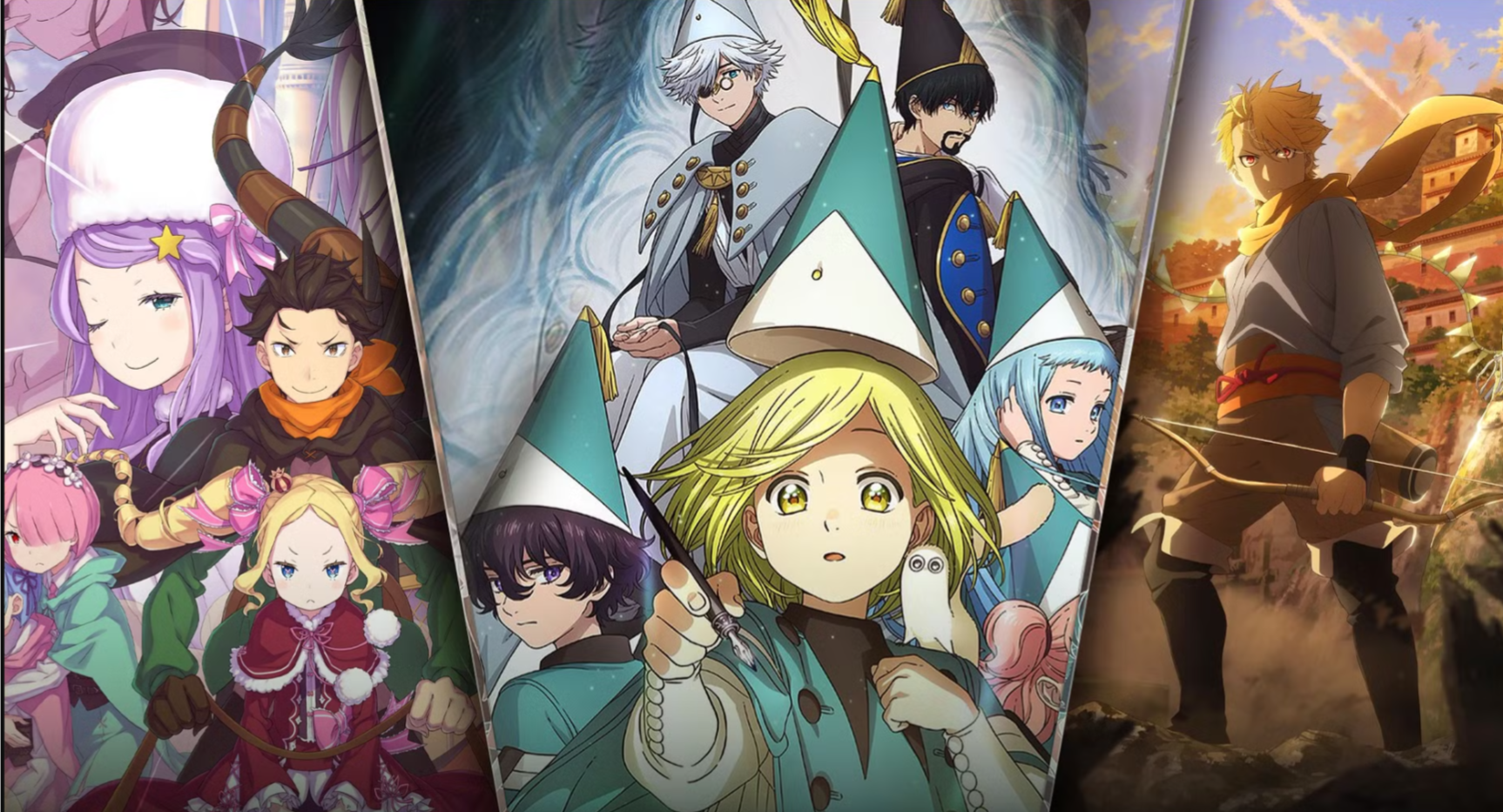
Walk the 2026 lineup with me for a second. One Piece finally reaching the Elbaph arc after folks waited two full decades for that payoff. Re:Zero pushing into its fourth run. Chainsaw Man lining up its second television chapter, although nobody has given us a premiere date yet. Jujutsu Kaisen loading up a third. Mushoku Tensei rolling deeper into its third. Black Clover clawing back onto screens after roughly five years gone. Bleach grinding through the final stretch of that Thousand Year Blood War business it resurrected out of nowhere. A shiny new Ghost in the Shell adaptation drawing from the original manga. Magic Knight Rayearth getting dusted off. High School Kimengumi, a title half the people reading this have never heard spoken aloud, back on the slate too.
You see the pattern yet? I saw it and my stomach dropped a little.
Almost none of this started life in 2026. Barely any of it started life in the last decade. The medium is fatter than it has ever been, richer by the year, more globally beloved than any generation before us dreamed possible, and it is running damn near entirely on stuff we already knew we loved. Sequels stacked on continuations stacked on revivals of things your older cousin watched in middle school.
Here is where the money conversation earns its seat, because this is not a mystery. Bushiroad’s Anime Data Insights Lab published a full forecast on the business heading into this year, and the takeaway was blunt. Proven property is the safe money. Original storytelling is the gamble. When a production committee can point at a manga that already moved fifty million copies and say the audience is guaranteed, why would it greenlight some untested swing from a writer nobody knows yet? Bushiroad producer Yusuke Onuki estimates that overseas streaming platform revenue now covers more than seventy percent of production costs for most current anime. That is not pocket change. It signals the whole model tilting toward whatever travels easiest across borders, and what travels easiest is a name audiences already recognize.
Nostalgia stopped being a vibe. It turned into a business plan. Studios looked at grown fans in their thirties and forties, the ones with real disposable income and a soft spot for the shows of their youth, and they did the math. Reboot the 90s hit. Remaster the 2000s classic. Print the receipt.
And look, I would be lying to your face if I said it doesn’t work. Demon Slayer took its Infinity Castle chapter to theaters and walked out with nearly eight hundred million dollars worldwide, the highest earning film the artform has ever produced, the highest earning Japanese picture of any kind, period. People lined up around the block. IMAX screens sold out. My whole timeline was nothing but reaction videos and grown men wiping their eyes in parking lots. So nobody can stand here and tell me the audience is bored. The receipts say the opposite.
But hype for a known quantity and hunger for the unknown are two different animals, and I think we keep confusing them.
Because here is what quietly worries me as somebody who has loved this thing since dial up. When the entire pipeline optimizes for adaptation, the raw material dries up somewhere upstream. Everything great that gets adapted came from a mangaka who took a wild shot years earlier, usually broke, usually doubted, drawing something weird nobody asked for. Frieren was that once. One Piece was that once, a skinny kid pitch about a rubber pirate that editors probably side eyed. Every beloved property currently getting the deluxe multi season treatment was, at its birth, exactly the kind of unproven risk that today’s spreadsheet logic would strangle in the crib.
So what happens in fifteen years when the well of adaptable classics runs low? What do the studios of 2041 remaster when this generation refused to let anything genuinely strange grow?
I am not saying the sky is falling. There are bright spots and I would be a hater to ignore them. Dandadan came through swinging with its own bizarre energy. Sakamoto Days brought real flavor. Witch Hat Atelier is shaping up to look like a painting come alive. Folks are even reviving axed manga, stories that got canceled years earlier, which tells me some part of the industry is scraping the couch cushions for anything that feels a little different. That scraping is not entirely a bad sign. It means somebody in a boardroom still remembers that surprise is the whole point, that the thrill of this artform was always the left turn you never saw coming. I hold onto those flickers. Have to, if I am being honest.
And I have to keep it a buck about the human cost too, because we do not talk about it enough. All this record-breaking output is landing on the backs of animators working brutal schedules for pay that can hover around minimum-wage levels. The delays, the split releases and the seasons that disappear for years can reflect a mixture of workforce shortages, overloaded studios, production trouble and scheduling decisions. Bigger is not automatically better when bigger means burning your people out to hit a committee deadline. A culture cannot stay adventurous if the artists holding it up are too exhausted to dream.
I think about what pulled me in as a kid, and it was never the guarantee. It was the not knowing. Flipping to Toonami with no clue what I was about to witness. Getting hit with something so unlike anything American television would ever air that it rearranged how I saw stories. That electricity came from creators being allowed to be genuinely weird, genuinely regional, genuinely themselves, without a global marketing plan hovering over every frame.
We landed the global marketing plan now. The billion dollar box office belongs to us. We got the coworker with the tote bag pin and the barber quoting sorcerers between clippers. All of that is a win and I will not pretend otherwise. The blerd dream came true, and it arrived loud, in theaters packed shoulder to shoulder, folks who look like me and folks who do not, everybody hollering at the same frame.
I just want the medium to remember what carried it here. It was not the ninth chapter of a proven brand. Nah, it was some broke visionary in a cramped Tokyo apartment betting everything on an idea too odd to succeed. Give me more of those bets. Fund the strange idea. Take the swing that might miss.
Because I will still be there day one for Elbaph, tissues ready, hollering at my screen like everybody else. But a small part of me is out here scanning the horizon, waiting on the next thing that nobody saw coming. That is the version of this culture I fell for. It is the one worth protecting, even when the safe money says otherwise.
Staff Writer; Greg Tucker
GT is an old-school blerd who loves anime, comics, manga, video games, and collecting indie Black comic books.
Contact him at: GregT@AfroGamers.com.